





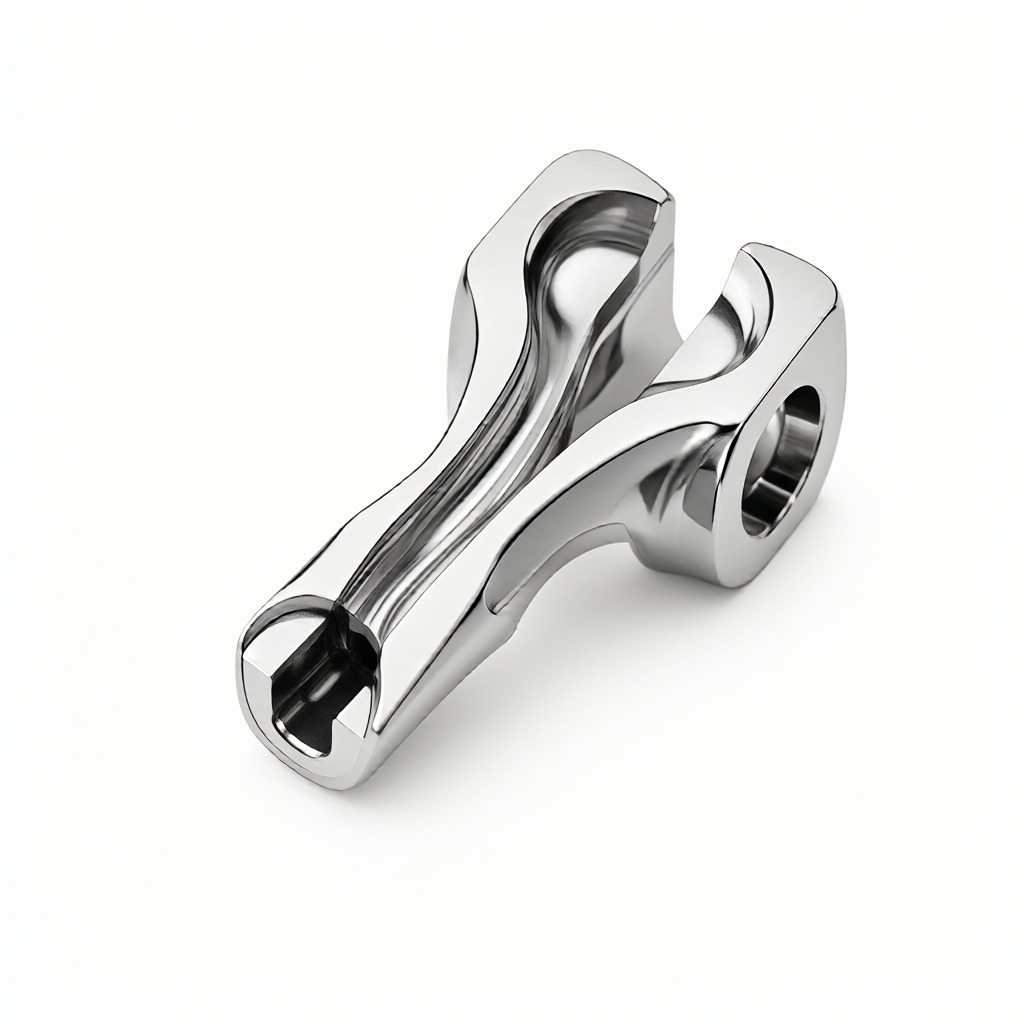
Opening: Compliance Core for Medical Precision Manufacturing
In medical device development, precision CNC machining is not only a means of shape reduction, but also the basis for ensuring biocompatibility and long-term safety. For titanium alloy, stainless steel and high-performance polymer parts, micron-scale morphological changes during machining directly affect subsequent coating adhesion and sterilization efficiency.Precision machining of medical instrumentsThe key technical node of the company, combined with the biocompatibility coating system and ISO 14644 cleanliness standard, analyzes how to achieve compliance delivery from blank to finished product through process parameter optimization. Based on actual production experience, we sort out the processing path for different implantable and non-implantable parts, helping the engineering team to control the surface roughness Ra value and avoid fatigue failure caused by stress concentration under the premise of meeting FDA 21 CFR 820 and EU MDR regulations.
Biocompatibility coating material selection and substrate matching
Coating selection is based on the chemical inertness and thermal stability of the substrate. Titanium Alloy (Ti-6Al-4V) is the mainstream substrate for orthopedic implants, and the titanium oxide layer formed on its surface has good biological activity. For applications requiring rapid bone integration, hydroxyapatite (HA) coating is achieved by plasma spraying or electrophoretic deposition; titanium nitride (TiN) coating is often used on wear-resistant joint surfaces to reduce friction coefficient. The coating must be harder than the substrate to resist wear, and the coefficient of thermal expansion must be matched to avoid spalling during service.

- Ti-6Al-4V titanium alloy: Widely used in internal fixation and joint prosthesis, CNC machining should pay attention to avoid cutting heat caused by grain coarsening, it is recommended to use a fully cooled low feed strategy.
- 316L medical stainless steel: Low cost, suitable for surgical instruments, but corrosion resistance is lower than titanium alloy, the surface needs to reach Ra 0.4 μm below to reduce protein adsorption.
- PEEK PEEK: Used for spinal fusion cage, CNC milling is easy to produce burrs, need to cooperate with specific tool geometry and speed optimization, prevent micro-crack initiation.
ISO 14644 Cleanroom classification and process environmental control
ISO 14644-1 classifies cleanrooms into nine classes, and medical precision parts are typically finished in ISO Class 8 (100) or ISO Class 7 (1000) environments. Dust particles in the environment can embed into pores on metal surfaces, creating breeding grounds for bacteria and damaging coating integrity. Particle count monitoring is required prior to processing to ensure that suspended particle concentrations are below limits under static and dynamic conditions. For non-implantable device housings, ISO Class 8 is sufficient; however, it is recommended that the final inspection and assembly of implants be upgraded to ISO Class 7 in order to comply with aseptic manufacturing process requirements.
Effect mechanism of particulate contamination on surface quality
Particles fall onto the workpiece surface to form physical bumps, resulting in localized electric field concentration during subsequent anodization or plating processes, resulting in uneven oxide film thickness. In addition, particles mixed with the cutting fluid system may be pumped to the vicinity of the tool with the fluid, causing surface scratches. Therefore, the clean environment is not only air filtration, but also the independent filtration and sealing design of the cutting fluid circulation system to prevent cross-contamination of external media.
Control of CNC Machining Parameters on Surface Roughness
Surface roughness is a direct indicator of biocompatibility. Rough surfaces increase contact area, which is conducive to bone ingrowth, but also increases the risk of bacterial film formation. For non-osseointegration sites, the target Ra value is usually controlled at 0.4-0.8 μm. Through five-axis machining, tool path strategy can be optimized to avoid tool marks. Among cutting parameters, feed speed (Feed Rate) has the most significant effect on Ra: reducing the feed rate and speed ratio is beneficial to obtain smoother surfaces. The following are recommended parameter ranges for different materials and finishing stages:

| material trademark | tool type | Recommended feed rate (mm/r) | Target Ra value (μm) | cooling method |
|---|---|---|---|---|
| Ti-6Al-4V | solid carbide end mills | 0.15 - 0.25 | 0.4 - 0.8 | Micro Lubrication (MQL) |
| 316L Stainless Steel | sharp-edged milling cutter | 0.20 - 0.30 | 0.8 - 1.2 | high pressure microcooling |
| PEEK | Double-edged carbide knife | 0.30 - 0.50 | 0.8 - 1.6 | Dry or air blown |
Note: Chlorine-containing coolants are strictly prohibited for titanium alloy machining to prevent hydrogen embrittlement effects. Water-soluble synthetic cutting fluids or MQL technology are recommended to ensure lubrication and reduce chemical residues. After machining, pickling passivation must be performed to remove residual oil and microcrystalline layers on the surface and open up active substrates for subsequent coatings.
Comparison of coating process and post-treatment integration scheme
The coating process determines the final functional characteristics of the part. Common integration solutions include physical vapor deposition (PVD) CVD and solution dip coating. PVD TiN coatings have a hardness of more than 500 HV and excellent wear resistance, while HA coatings are electrochemically deposited for strong adhesion and high biological activity. In selecting the process, equipment versatility needs to be weighed against cleanliness requirements. If electroplating process is adopted, the pretreatment bath solution should be changed regularly to avoid heavy metal ion pollution penetrating into the pores of the substrate and affecting the biological safety evaluation.
Inspection verification and DFM design optimization recommendations
Acceptance criteria are not only size, but also microscopic quality. It is recommended to use a white light interferometer to measure the full surface 3D profile, rather than a traditional touch roughness meter alone, as the latter cannot capture peak-to-valley distribution differences over a wide range. During the DFM phase, engineers should avoid designing overhangs that are too thin, which are prone to chatter due to vibration in CNC machining (Chatter Marks), chatter marks are stress concentration sources, and are difficult to detect under coating coverage, easy to fatigue fracture in service. In addition, it is recommended to use rounded transitions above R0.5 at all corners to eliminate sharp corner stress concentration and reduce the risk of coating cracking.

Common Failure Modes and Avoidance Strategies
- disbonding: Due to insufficient substrate cleanliness or excessive pretreatment corrosion. Evasion: Spray immediately after ultrasonic cleaning to shorten exposure time.
- surface discoloration: from high temperature oxidation or pollution. Avoid: control the thermal deformation of the machine, the use of high-purity nitrogen protection.
- microcrack: From machining residual tensile stress. Avoid: After finishing/milling, introduce stress aging treatment to eliminate residual stress.
Batch Consistency and Supply Chain Quality Management
Medical devices require high batch consistency. We implement full traceability in batch production, archiving data for each tool path to ensure traceability to specific machine and tool conditions in case of quality fluctuations. For coating links, establish independent clean room environmental monitoring records, recording particle count and temperature and humidity data daily. For critical size, SPC control charts are used for process capability (Cpk) monitoring, and shutdown immediately when Cpk is lower than 1.33. This proactive quality control helps to control customer failure rates to a very low level, in line with the strict requirements of the medical system for risk management.
Frequently Asked Questions (FAQ)
What are the limits of CNC machining of medical devices on surface treatment residues?
Residues must comply with biocompatibility test (ISO 10993-17) limits, generally requiring leachables below specified thresholds, after processing to be validated by multi-stage pure water rinse and drying.
ISO 14644 Class 7 and 8 clean rooms in the processing of medical parts how to distinguish?
ISO Class 7 has fewer suspended particles and is suitable for final inspection of implants or high-sensitivity optical components;ISO Class 8 is suitable for non-implantable devices or general housing processing at a lower cost.
Why is titanium alloy cutting easy to stick? How to solve it?
Titanium's high modulus of elasticity and low chemical reactivity lead to chip rebound adhesion. Solutions include the selection of large edge angle tools, low feed rates, adequate cooling and the use of MQL technology.
Does biocompatibility coating affect part size accuracy?
Coating will increase micron thickness (e.g. HA ~ 10-50 μm), coating compensation must be reserved at DFM stage, and the difference between net size and machined size must be clearly defined in the design drawing.
How to ensure uniform coating thickness in batch production?
Multi-station rotary tooling is adopted to ensure that the positions of all parts are equivalent in the electric field or air flow field, and the first and last parts are sampled by an online thickness gauge, and the data are recorded for review.
Conclusions and recommendations for cooperation
At the heart of precision machining of medical devices lies the deep integration of materials science, clean engineering and CNC processes. Strict environmental control, optimized cutting parameters and reliable biocompatible coating solutions significantly reduce compliance risks and product failure probabilities. If your project involves CNC customization of titanium alloy implants or complex structures, it is recommended to provide drawings and specific cleanliness requirements. We will evaluate the process route for you in combination with DFM experience and assist in developing a machining and inspection plan in accordance with ISO 14644 standards. Welcome to send a technical specification inquiry for specific process suggestions and quotations for your project.



