


Material Selection Guide: Aluminum, Stainless Steel, and Titanium Alloy Comparison
Compare aluminum, stainless steel, and titanium for CNC machining. Analyze strength, weight, cost
The lightest yet the strongest — cut weight without losing performance


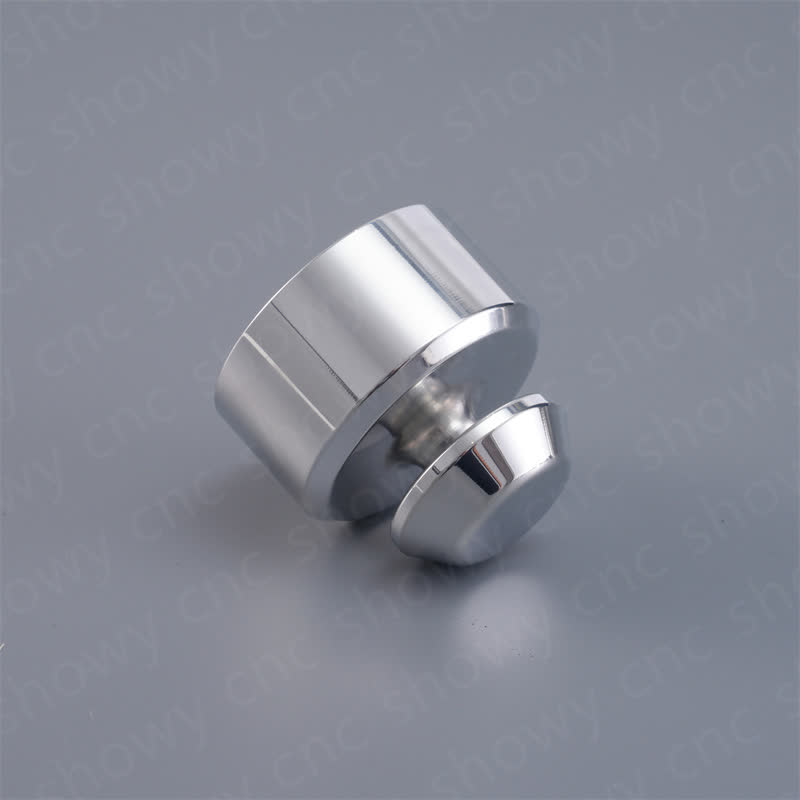


Titanium is a premium CNC machining material renowned for its exceptional strength-to-weight ratio, outstanding corrosion resistance, and biocompatibility. It is the material of choice for aerospace, medical implant, and high-performance automotive applications where failure is not an option.
We specialize in machining Ti-6Al-4V (Grade 5), the most widely used titanium alloy, offering an excellent balance of strength, ductility, and fracture toughness. We also machine commercially pure titanium (Grades 1-4) for applications requiring maximum corrosion resistance or formability.
Titanium machining requires specialized tooling, cutting parameters, and expertise due to its low thermal conductivity and tendency to gall. Our experienced machinists use advanced carbide tooling and optimized cutting strategies to achieve superior surface finishes and tight tolerances consistently.
The following table lists typical mechanical, thermal, and physical properties for this material. Actual values may vary by grade and temper.
| Property | Value | Unit |
|---|
We stock multiple grades for different application needs. Each grade offers distinct properties optimised for specific uses — click to view detailed specifications, machining advice and typical applications.
The most widely used titanium alloy, balancing strength, ductility, and fracture toughness; the standard material for aerospace and medical industries.
View Details Commercially PureUnalloyed commercially pure titanium with excellent corrosion resistance and good formability; used in chemical and marine industries.
View Details Corrosion ResistantPalladium-enhanced version of Grade 2, with superior corrosion resistance in extreme chemical environments.
View Details High StrengthMedium-strength alloy with excellent weldability, used for aircraft tubing and bicycle frames.
View Details High TemperatureExcellent high-temperature performance with good weldability, used in heat exchangers and chemical equipment.
View Details High TemperatureHigh-temperature alloy for jet engine components, retaining strength up to 540°C.
View DetailsThis material is widely used across multiple industries for various applications, from precision prototypes to end-use production parts.
Surgical instruments, housings
Structural brackets, panels
Engine components, housings
Heat sinks, enclosures
Motor mounts, brackets
Fixtures, jigs, tooling
Frames, handles, cases
Fittings, valves, hardware
| Finish Type | Description | Ra (typical) |
|---|
The questions engineers ask most about machining, surface quality and selecting this material.
Related to Titanium
Related to Titanium
Compare aluminum, stainless steel, and titanium for CNC machining. Analyze strength, weight, cost
Related to Titanium
In-depth guide to CNC machining covering 3/5-axis milling and turning. Optimized for engineers and buyers to enhance precision and efficiency.
Analyze aluminum CNC machining costs. Covers 6061/7075/5052 specs, process optimization, and DFM design to boost supply chain efficiency.
By engaging DFM early and optimizing material selection, engineers can reduce machining time, scrap rates
Related to Titanium
Expert CNC aluminum DFM guide: ISO 261 drill formulas, blind hole depth, & thread tolerances for reliable, aerospace-grade assemblies.
Based on 72 CNC machines, here are 10 design rules for aluminum precision. Cover wall thickness, tolerance, and DFM to prevent scrap, ensure ±0.01mm a…
Learn how CNC tolerances impact aluminum part quality and cost. Explore ISO 2768, GD&T, and surface finish.
Send your STEP / DWG / PDF drawing and get a detailed quote with free DFM analysis and process recommendations within 2 hours. No minimum order — from 1 piece.