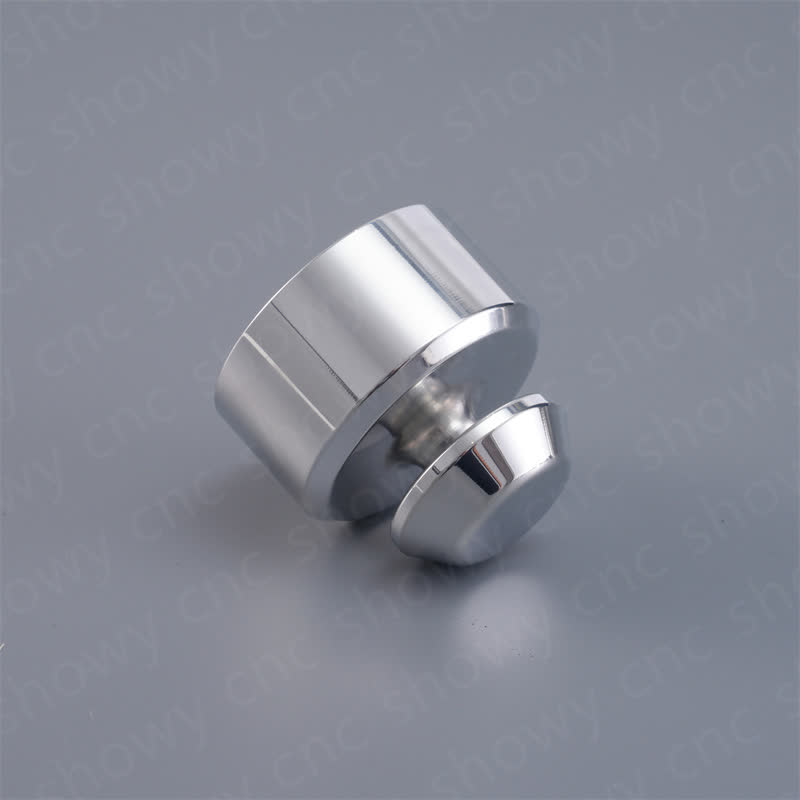


I. Early-Stage DFM Intervention: Locking in Manufacturing Costs at the Drawing Stage
Controlling manufacturing costs does not begin on the shop floor, but at the drafting stage. Many engineers habitually send designs directly to suppliers, expecting them to “build to print,” while overlooking a critical fact: the absence of Design for Manufacturability (DFM) leads to overly tight tolerances, redundant machining operations, and skyrocketing scrap rates. In precision custom CNC parts, the core logic of early DFM intervention is to eliminate “unnecessary design features.” For example, relaxing tolerances on non-critical surfaces from ±0.005mm to ±0.02mm; for every micron of additional requirement, machining time and tool wear costs increase non-linearly. For parts requiring multi-axis machining, if design adjustments can reduce reliance on single-face clamping, the requirement can be simplified from 5-axis simultaneous machining to 3+1 axis or even 3-axis machining, directly lowering machine utilization costs and programming complexity.
In practice, engineers should check three dimensions: First, hole distribution — avoid excessively deep or narrow grooves; blind holes with a depth-to-width ratio exceeding 10:1 are highly prone to tool breakage during milling and suffer from difficult chip evacuation. Second, deburring surfaces — avoid sharp edges during design; specify a chamfer or fillet of 0.2mm–0.5mm, which facilitates later assembly and reduces post-processing labor costs. Third, concentricity requirements — if the part is not a core rotational precision component, it is recommended to reasonably split concentricity tolerance from position tolerance, rather than demanding extremely tight single indicators. Through DFM review, machining hours can typically be reduced by 10%-15%, which is the highest-leverage aspect of cost optimization.
II. Material Grade Selection: The Optimal Balance of Cost-Effectiveness and Performance
Material costs typically account for 30%-50% of the total cost of CNC parts. Blindly pursuing high strength or corrosion resistance by selecting titanium alloys or special stainless steels is often a cost trap. Engineers must train their thinking to “downgrade” based on functional requirements. For example, in general non-corrosive static load applications, 6061-T6 aluminum alloy is a more cost-effective choice than 7075 aluminum alloy; in the stainless steel field, 304 can replace 316 in many routine conditions unless strong chloride environments are involved. In more extreme cases, some structural components can use 6063 or 6082 to replace 6061; although ultimate strength is slightly lower, supply stability is better and the unit price is lower.
For plastic parts, POM (Delrin/Acetal) is superior to general-purpose ABS for wear-resistant gears, but PA6 or PA66 reinforced with glass fiber is lower in cost and sufficiently rigid for static support components. A key strategy is to establish a material substitution database and verify during the prototyping stage that substitute materials meet a safety factor requirement of 1.5 or higher. If material weight significantly impacts cost, weight can be reduced through topology optimization or honeycomb structural design, which lowers material costs and total machine weight, indirectly reducing logistics and assembly costs. Material selection is not just a procurement decision; it is an extension of engineering design.
III. Tolerance and Roughness Grading: Avoiding the Waste of Excessive Precision
Tolerance grades directly determine the machining strategy. Under the ISO 286 standard, IT6 grade tolerances usually require grinding or specialized finishing tools, while IT8 grade tolerances can be consistently achieved with ordinary milling. Many engineers habitually annotate the entire drawing with uniform tolerances of ±0.01mm or a roughness of 6μm, which is completely unnecessary for non-fitting surfaces and non-sealing surfaces. Surface roughness Ra values are strongly correlated with surface treatment methods: Ra 3.2μm can be achieved through fine milling, while Ra 1.6μm may require polishing or Electrical Discharge Machining (EDM), causing costs to rise exponentially.
It is recommended to adopt the “Functional Tolerance” principle: specify strict tolerances and roughness only for assembly interfaces, kinematic pairs, sealing surfaces, and visible aesthetic surfaces. For non-functional internal structural surfaces, tolerances can be relaxed to ±0.05mm or even ±0.1mm, with roughness relaxed to Ra 12.5μm. This graded management not only lowers machining costs but also improves lot consistency, as looser tolerances are less sensitive to tool wear and machine thermal deformation, thereby reducing scrap rates. In quotation negotiations, clearly distinguishing between critical dimensions and general dimensions is an effective means for engineers to control budgets.
IV. Geometric Dimensioning and Tolerancing (GD&T) Optimization: Starting from Function
Geometric Dimensioning and Tolerancing (GD&T) is more scientific than traditional linear tolerances, but its abuse significantly increases inspection difficulty and cost. For example, for a non-rotating plane, specifying center plane flatness of 0.01mm is more reasonable than specifying total runout of 0.01mm, because flatness only measures the distance between two points, whereas runout involves axial relationships and has extremely high fixture requirements. If the part’s primary function is static support, avoid specifying form and position tolerances; if the function is dynamic positioning, use Maximum Material Requirement (MMR) or Least Material Requirement (LMR) to release tolerance and fit space.
The MMR strategy allows interchangeability between dimensional deviation and form/position error; that is, the closer the part dimensions are to the maximum material boundary, the greater the allowable form/position error. This is highly advantageous in mass production because it tolerates natural fluctuations during machining and reduces the rework rate. When designing, engineers should clearly define the functional purpose of GD&T: is it to ensure smooth assembly or to guarantee motion accuracy? The former can use composite tolerances, while the latter requires individual control of critical points. Incorrect GD&T annotations not only increase machining costs but also lead to misinterpretation by suppliers, causing batch scrap.
V. Process Route Comparison: Turning, Milling, and Turning-Milling Integration
Selecting the process route is the second gate for cost control. For rotational parts, CNC turning is typically 20%-30% lower in cost than multi-axis milling and has higher material utilization. However, if a part has both complex external contours and internal hole systems, simple turning requires frequent tool changes or additional operations. In this case, the turning-milling integrated machine (Mill-Turn) becomes the balance point; although equipment depreciation is high, it completes multi-face machining in a single setup, eliminating cumulative positioning errors, significantly improving precision and rigidity.
| Process Strategy | Application Scenarios | Cost Characteristics | Pros/Cons |
|---|---|---|---|
| 3-axis milling | Simple flat plates, housings, shallow cavities | Low | Widely available equipment, simple programming; but low efficiency for deep cavities, prone to tool crash |
| 5-axis linked milling | Impellers, turbomachinery, complex freeforms, multi-face holes | High | Single-setup machining, high accuracy; but expensive equipment, high programming barrier |
| Swiss-type turning / Lathe | Small-diameter shaft-type parts with high length-to-diameter ratio | Medium (batch) | High efficiency, good rigidity support; not suitable for large-size or heavy parts |
| Mill-turn compound machining | Complex shaft-type parts, multi-functional parts with flanges | High (single piece) / Low (batch) | Consolidated processes, high accuracy; high equipment investment, suitable only for multi-variety or batch orders |
The selection strategy lies in the matrix matching of "batch scale" and "complexity." For small-batch complex parts, prefer 5-axis or mill-turn compound machining to gain accuracy and lead time; for large-batch simple parts, prefer 3-axis or Swiss-type lathe to gain efficiency and unit cost. Engineers must clarify this logic in the BOM and process cards to avoid suppliers uniformly adopting high-cost processes for convenience.
6. Batch Production Consistency: Reducing Hidden Costs Through Standardization
For batch orders (100+ pieces), hidden costs often stem from "batch-to-batch variation." If the surface treatment color of each batch is inconsistent, or the mean size distribution is shifted, it will lead to a decrease in final assembly yield. The core of consistency control is standardized procedures (SOP) and parameter locking. For example, in the anodizing process, current density, electrolyte temperature, and time must be strictly locked within a specific window, not "approximately" a value. In CNC machining, tool life compensation curves should be based on historical data regression, rather than manual experience estimation.
In addition, raw material lot management is critical. Aluminum bars or steel plates from different lots may have slight differences in hardness and microstructure, affecting cutting parameters. Requiring suppliers to provide Material Test Reports (MTR) and spot-checking hardness is the first line of defense against batch scrap. Regarding aesthetic quality, the requirement for high-brightness finishes and scratch-free surfaces is highly challenging in mass production and relies on automated loading/unloading and fine protective padding materials. Consistency is not just a quality issue but a cost issue: reducing the scrap rate from 2% to 0.5% directly translates into profit margin.
7. Cost Optimization of Surface Treatment: Balancing Function and Aesthetics
Surface treatment is a frequently overlooked cost black hole. Electroplating, sandblasting, hairline finishing, anodizing—each adds 50%-300% to surface costs. Engineers need to distinguish between "functional requirements" and "aesthetic requirements." For example, non-cosmetic parts do not require high-gloss or sandblasted finishes; standard anodizing or even natural aluminum can meet insulation and corrosion protection needs. For parts requiring wear resistance, phosphating or nitriding penetration may be more cost-effective and durable than thick-layer electroplating.
On cosmetic parts, avoid "mixed processes." If the same part has both matte and high-gloss areas, zoned treatment is usually required, increasing positioning and masking costs. Design should aim to unify surface treatment styles or simplify processes through split-part design. If multiple surface effects must coexist, evaluate the area ratio of the zones; small high-gloss areas can be achieved through local polishing instead of overall polishing, reducing consumable and man-hour costs. The quality of pre-cleaning and degreasing before surface treatment directly affects adhesion; if this step is ignored, there is a risk of peeling later, and rework costs far exceed prevention costs.
8. Supply Chain and Logistics Cost Control: A Total Cost of Ownership (TCO) Perspective
Total Cost of Ownership (TCO) includes procurement price, transportation, warehousing, tariffs, and capital occupation costs. For precision CNC parts, packaging and transportation may seem small in proportion, but cumulative costs are significant. Optimizing packaging structure, avoiding excessive filler material, and using reusable returnable containers can reduce per-instance logistics costs. If international delivery is involved, consider nearshore outsourcing or regional inventory strategies to shorten lead times and reduce the risk of production line stoppages due to waiting. The loss from a one-hour line stop often far exceeds the cost of the parts themselves.
Furthermore, establish strategic partnerships with suppliers, rather than engaging in pure price bargaining. Through long-term order commitments, suppliers can be supported in production prioritization, quality exemption, and price locking. For critical parts, it is recommended to maintain a dual-sourcing strategy, but ensure interchangeability through unified drawing specifications and inspection standards. In logistics costs, dimensional weight is often underestimated; compact assembly designs (such as pre-assembled shipment rather than loose parts) can significantly reduce volumetric rates.
Reducing Manufacturing Costs: 10 Common Strategies and FAQs for Engineers
How much does loosening tolerance standards impact assembly quality?
The impact depends on the nature of the assembly. Loosening to IT9/IT10 class for static structural components usually has no impact, but care is needed for dynamic kinematic pairs, requiring simulation verification of the impact of clearance on lifespan.
How to reduce CNC mach
Cost reduction?
Simplify the process, reduce the number of clamping operations, select general-purpose tools instead of dedicated ones, and negotiate fast prototyping channels with suppliers to avoid over-engineered designs.
Are turning-milling machining centers suitable for all shaft-type parts?
No. For shaft-type parts with a small length-to-diameter ratio or simple structures, conventional lathes offer higher efficiency and lower costs. Turning-milling centers are only applicable to complex, multi-function parts.
Can surface treatment be omitted at the design stage?
Yes. If the material itself (such as 316L stainless steel or aluminum alloy) provides sufficient corrosion resistance for the operating conditions and there are no aesthetic requirements, surface treatment can be omitted, significantly reducing costs.
How can a supplier’s batch consistency capability be evaluated?
Review their Cpk data reports, require First Article Inspection (FAI) reports and lot sampling data, and assess whether they possess CMM full-inspection capabilities and standard operating procedures (SOPs) for tool life management.
Reducing manufacturing costs is a systematic engineering effort that relies on the coordinated optimization of design, process, material, and supply chain. Engineers must adopt a holistic perspective, integrating Design for Manufacturability (DFM) thinking into the early stages of R&D rather than attempting remediation at the end of production. Through rigorous DFM reviews, reasonable tolerance allocation, and scientific material selection, manufacturing costs can be significantly reduced while ensuring product quality. It is recommended that you self-check your latest drawings against the strategies above or submit them to a partner with professional engineering assessment capabilities to obtain more actionable cost-optimization solutions. If you have specific part drawings requiring evaluation, please feel free to send the technical parameters and quantity requirements; we will provide free DFM recommendations and process route suggestions.