





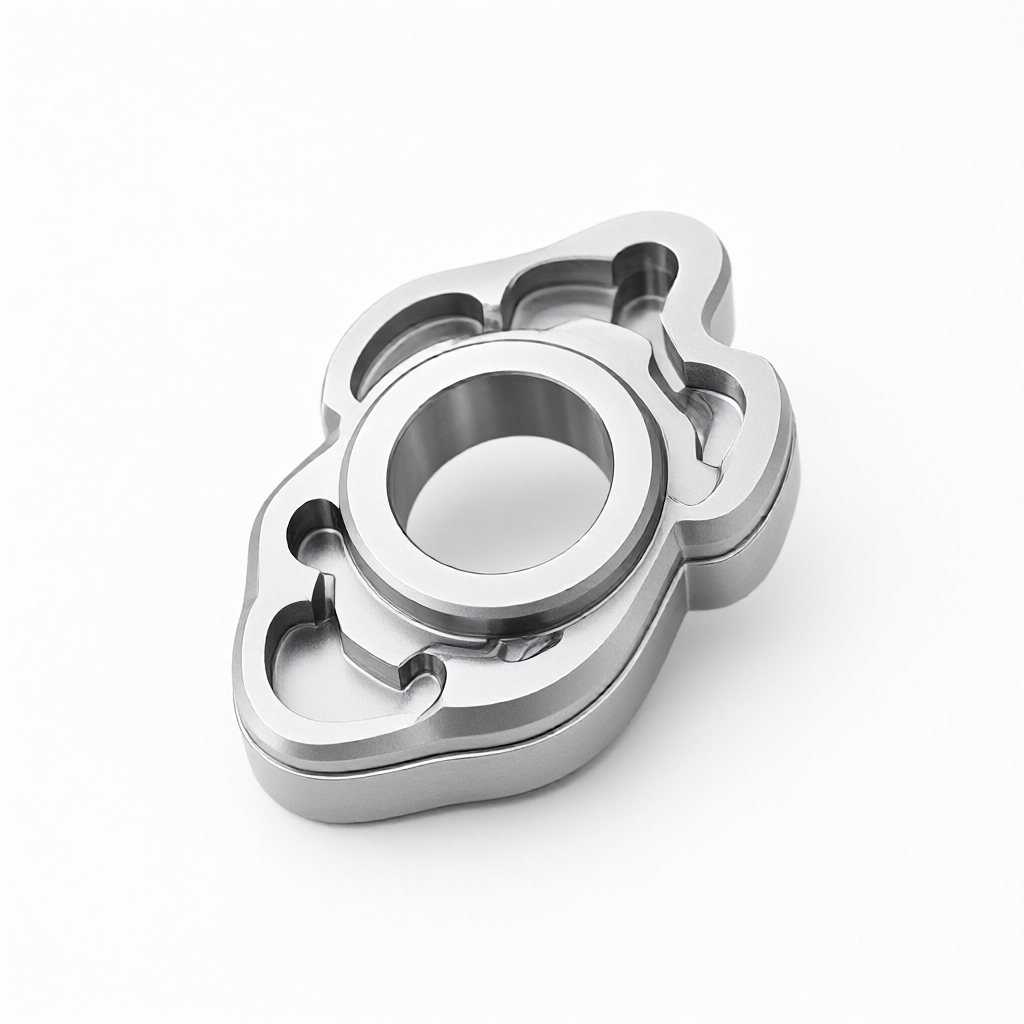
In the production of precision CNC machining through holes, the deburring process directly determines the assembly accuracy, electrical safety and appearance consistency of parts. For engineering procurement, neglecting the deburring process often leads to stagnation in mass production, scratches on cables or affects subsequent plating adhesion. ShowyMetal, as a CNC manufacturer focusing on mass customization, provides one-stop service from 3-axis/5-axis milling to CNC turning, combined with anodizing, sandblasting and other surface treatments to ensure aperture tolerance within ±0.01mm, surface finish Ra0.4μm, and full control of edge quality after burr removal.
Core engineering value and failure risk of deburring process
Burrs are not just visual flaws, but functional hazards. In through-hole machining, cutting forces cause material to tear rather than shear completely, forming microscopic metal bumps. If not effectively removed, the following problems may occur:
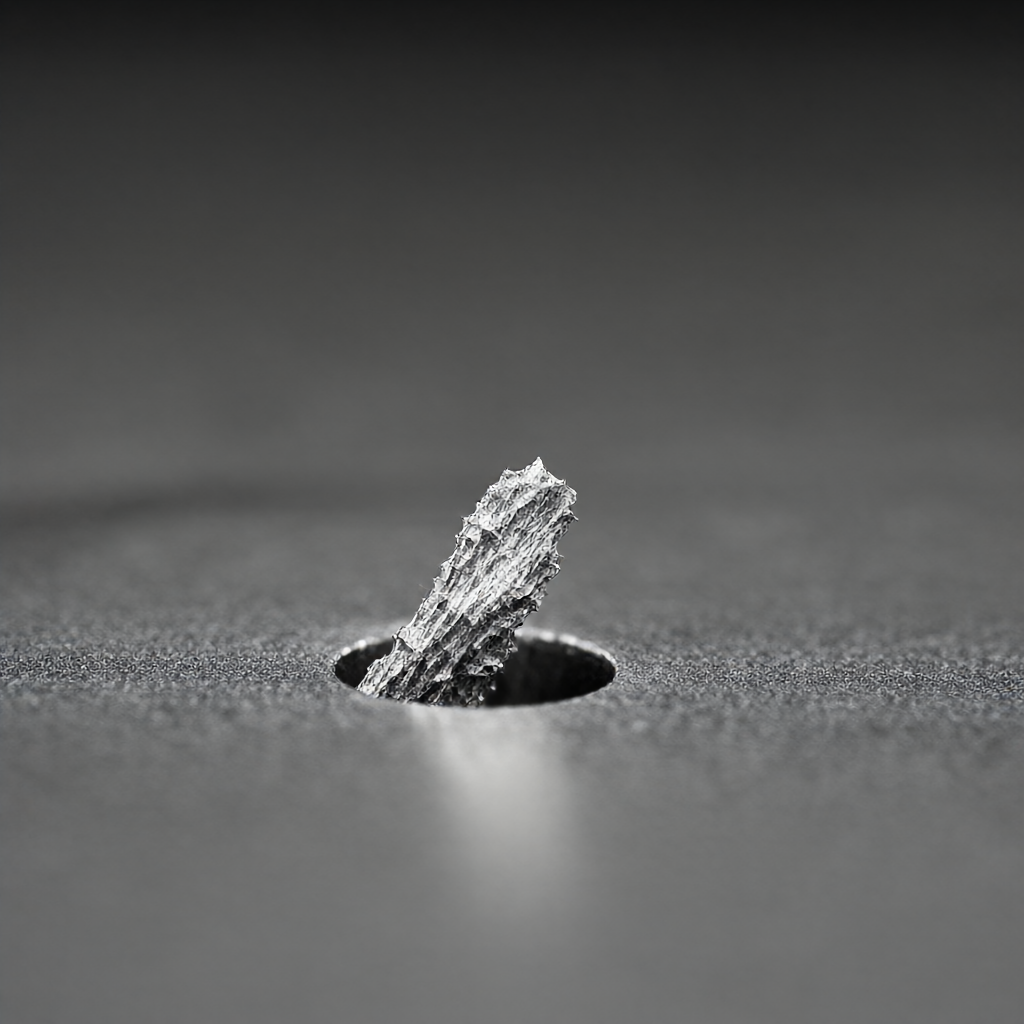
- Assembly interference: Burrs jam mating parts, increase assembly resistance, and even lead to thread slippage.
- Electrical short circuit: In semiconductor or communication equipment, copper or aluminum burrs that are not cleaned may cause short circuits between PCB layers.
- Defective plating: Electrolyte is easy to accumulate at burrs, resulting in peeling or uneven thickness of plating layer.
- Stress concentration: Sharp edges become the source of fatigue cracks, reducing part life.
Therefore, deburring must be used as a standard process in CNC machining processes, not as an afterthought.
Comparison of common deburring process schemes and technology selection
Process selection varies significantly according to material (aluminum, steel, stainless steel, brass, engineering plastics) and pore size. The following table compares the applicable scenarios and advantages of the three mainstream solutions:
| process type | Applicable materials | advantage | Limitations and considerations |
|---|---|---|---|
| mechanical deburring | Steel, stainless steel, brass | High efficiency, online automation; suitable for mass production | Carbide tools are easy to wear; deformation of thin-walled parts may occur |
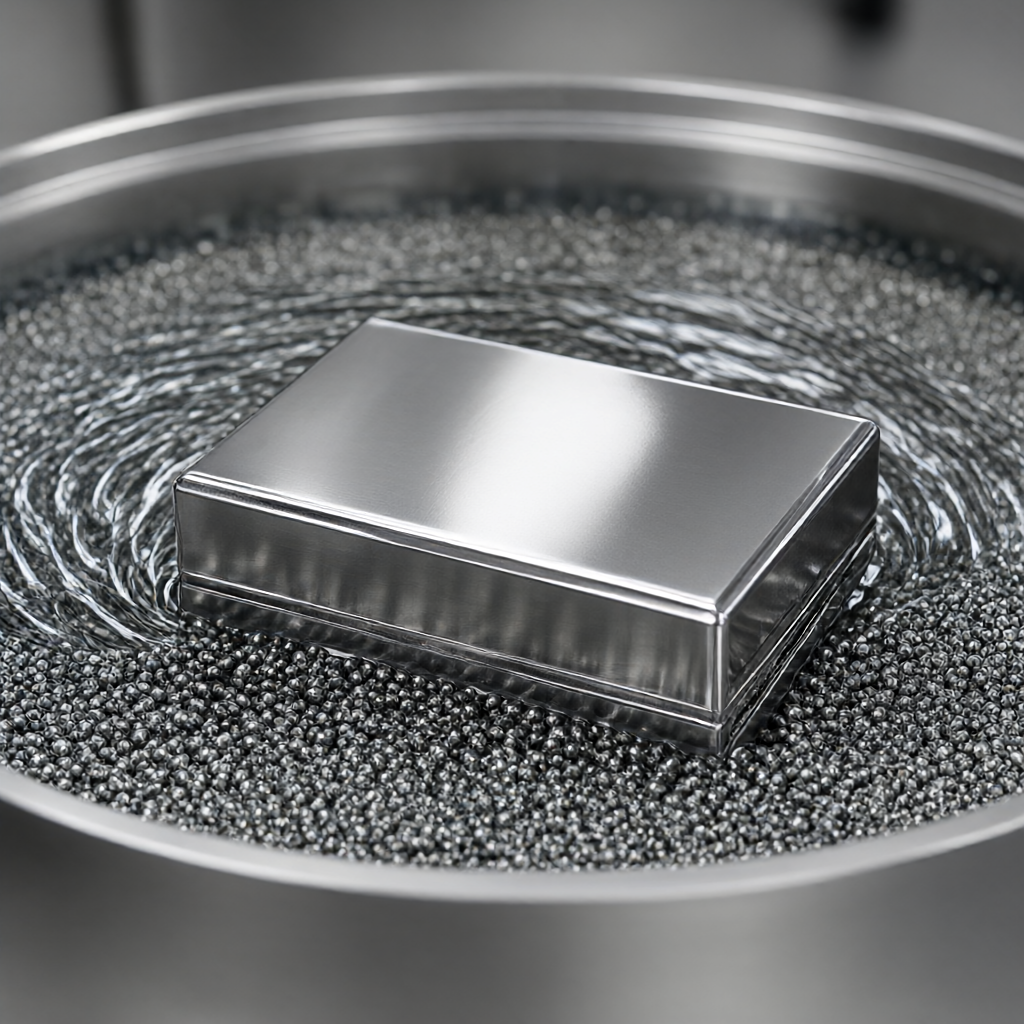
| vibration deburring | Aluminum, zinc alloys, plastics | No contact stress, avoid scratching the surface; suitable for complex cavities | Time consuming; limited effect on deep blind holes |
| chemical deburring | Steel, aluminum (to be strictly distinguished) | Can deal with hard-to-reach cavity burrs; uniform surface | Corrosion residual risk; strict washing; environmental protection pressure |
Selection suggestions: For ShowyMetal's high-gloss batch orders, mechanical deburring combined with ultrasonic cleaning is a common combination; for precision aerospace parts, vibration deburring is better; for multi-cavity plastic parts, priority is given to evaluating injection molding process optimization to reduce subsequent deburring requirements.
Practical Points of Online Deburring in CNC Through Hole Machining
Deburring during machining is the integration of deburring action into CNC programs to reduce secondary clamping. Key parameters include:
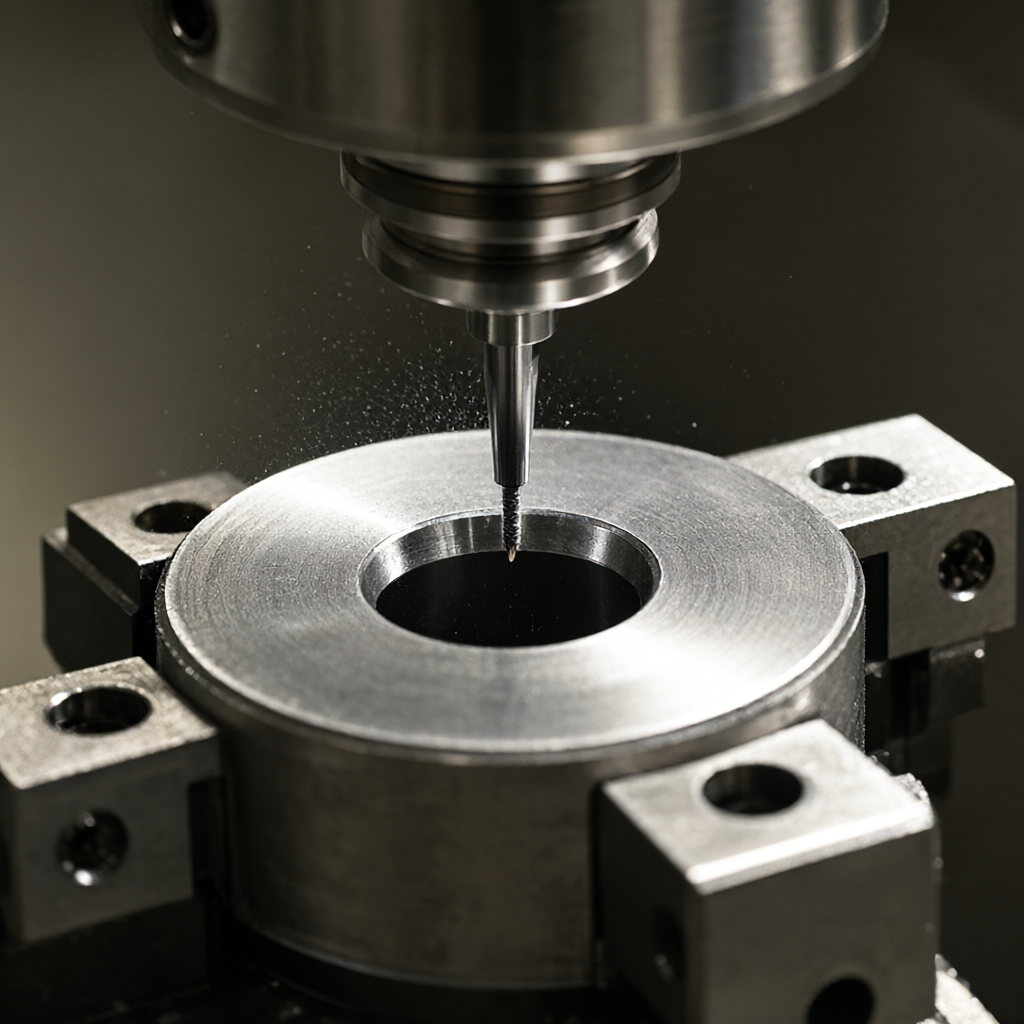
- Tool Selection: Ball-nose milling cutter or special deburring cutter with radius slightly smaller than hole diameter to avoid damaging hole wall.
- Speed and feed: Deburring speed is usually 50%-70% of the finishing speed, and the feed rate is reduced to 30% to prevent chatter.
- Knife path design: Design circular deburring path for hole edge instead of simple straight cutting. Deep hole needs to be divided into multiple passes, each removal of 0.02-0.05mm.
- Coolant management: Ensure that chips are completely punched out to avoid secondary burrs caused by chip accumulation.
For 5-axis machining of multi-faceted through holes, tool interference should be calculated in advance, and the feasibility of tool path should be verified by post-processing program.
Deburring process differences of different material grades
Material characteristics determine the difficulty of deburring. Aluminum alloy (such as 6061-T6) toughness, easy to produce filament burrs, need low feed cutting; stainless steel (such as 304/316L) high hardness, low thermal conductivity, easy to stick tool, need high speed + full cooling; brass (C360) easy to process but easy to deform, deburring needs to be gentle. Engineering plastics (such as PEEK, nylon) burrs are fibrous, mechanical grinding is easy to produce electrostatic adsorption, it is recommended to combine vibration or low temperature deburring. ShowyMetal supports a variety of materials customization, process parameters are adjusted by the engineering team based on material grades and batch characteristics.
Quality inspection and acceptance criteria after deburring
Deburring effect can not be visual only, but quantitative inspection:
- Visual inspection: Check the orifice under a magnifying glass of more than 40 times, and there is no visible protrusion.
- Tactile/feeler inspection: Use 0.05mm feeler gauge to slide along the hole without thread hanging feeling; for precision parts, you can touch them with your fingers (gloves are required to avoid oil pollution).
- Altimeter measurements: For critical mating surfaces, measure the orifice edge profile using a surface roughness meter to ensure Ra values meet drawing requirements (typically ≤Ra0.8μm).
- Functional test: Fit the mating parts and measure whether the clearance is within the design tolerance.
ShowyMetal is equipped with coordinate, optical measurement and roughness meter, and performs full inspection or AQL sampling before shipment to ensure batch consistency.
Common Deburring Failure Modes and Avoidance Schemes
Common deburring failures in production include:
- Burr residue: Cause: tool passivation, feed too fast. Avoidance: regular tool inspection, optimization of cutting parameters.
- Orifice enlargement/contraction: Cause: Deburring force is too large to cause elastic deformation. Avoidance: light cutting, multiple feed, measurement immediately after deburring.
- Surface scratches: Cause: mechanical deburring tool runout or chip back scraping. Avoidance: use guide ring, enhance cooling flushing, vibration deburring medium particle size matching.
How to choose a deburring process based on aperture size?
Small aperture (20mm) high mechanical efficiency, suitable for online deburring.
What are the main differences between deburring parameters for aluminum and steel parts?
Aluminum parts need low feed and high speed to prevent sticking and long burrs; steel parts need higher back cut and coolant pressure to cut hard burrs. Refer to material supplier data for specific parameters and make first article confirmation.
Does deburring affect surface finish Ra values?
Correctly performed deburring does not significantly deteriorate the finish, and if the tool path is not properly designed or the rotation speed is too low, it may introduce ripples that cause Ra values to fluctuate. First article inspection is required to confirm that Ra values comply with the ±0.1μm tolerance band.
How to ensure the consistency of deburring in batch production?
Rely on CNC programs to lock in tool compensation, fix inspection points (e.g. orifice profile every 50 pieces), use automated fixtures to reduce human variability, and perform process inspections by Quality.
Do all vias need deburring?
For non-mating, non-conductive, non-visual surfaces, if the burr height is within assembly tolerance and has no functional impact, after customer engineering approval, trace burrs may be retained to reduce costs, but they shall be clearly marked on drawings or BOM.
To sum up, deburring is a key part of CNC machining quality closed-loop. Select the right process, control parameters, strict inspection, to ensure that parts from "machined" to "really usable" transformation. ShowyMetal provides full process support from DFM advice to batch delivery. If you have through hole parts deburring process questions or drawings to evaluate, welcome to provide detailed specifications and material requirements, we will give process solutions and quotations based on engineering experience.



