


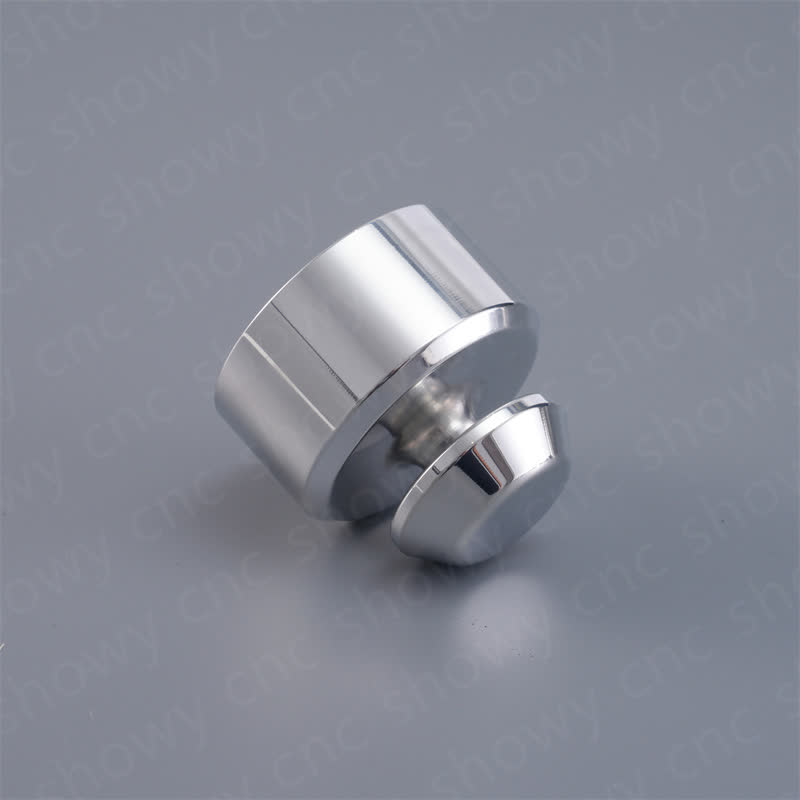


For parts with a fixed shape and high demand, using die stamping provides the highest production efficiency and the lowest cost per unit. Stamping can perform multiple deformations such as blanking, drawing, flanging, and coining/embossing. It is suitable for combining with bending to achieve complex 3D shapes and is the core process for mass production of automotive parts, home appliances, and equipment components.
Process Overview
Stamping production relies on dies: blanking dies perform cutting and punching, while forming dies perform drawing, flanging, and coining/embossing. Our stamping lines are equipped with presses of various tonnage ratings, combined with automatic feed systems to achieve continuous blanking. Drawn parts use double-action presses with blank holders to control material flow and prevent wrinkling and cracking. Dies are maintained and serviced by our in-house team, ensuring high stability during mass production.
Capability Parameters
- Applicable quantity: 1000 units or more recommended to amortize die costs
- Formable features: Drawing, flanging, coining/embossing, ribs
- Material utilization: Can reach over 80% after layout optimization
- Materials: Cold-rolled sheet, galvanized sheet, stainless steel, aluminum sheet, copper strip
- Part dimensions: Up to approx. 600 × 600 mm max (depending on die)
Technical Key Points
The quality keys in stamping are die design and material flow control: when the drawing depth exceeds the material limit, bottom cracking or flange wrinkling can occur. We adjust the blanking force and optimize lubrication to suppress defects while ensuring depth. Layout design determines material utilization; we use professional software for nest optimization (including shared edges) to minimize offcuts. Mass production implements first-article inspection and routine patrol inspection; dies are regularly sharpened and maintained.
Typical Applications
Shapes requiring die replication such as bowl-shaped parts, covers/shells, clips, and sliders/grooves. When the annual demand for your part is stable above a thousand units and the shape remains basically unchanged, stamping is the lowest overall cost solution. When demand is low or the shape changes frequently, a flexible solution using laser cutting and bending is recommended.
FAQ
Die costs are related to part complexity; simple blanking dies have lower costs, while complex multi-station dies are higher. When quantities reach over a thousand units, the amortized die cost per unit is usually significantly lower than other processes. We provide a complete cost estimation for dies and per-unit parts for your decision-making.
Not recommended. When the batch size is less than 500 units, die amortization is too high; a flexible solution using laser cutting and bending is recommended at this time. When the product enters stable mass production, we will evaluate whether to switch to stamping to further reduce costs.
Common thicknesses are 0.5–3.0 mm; drawn parts generally do not exceed 2.0 mm. Specific thickness should be confirmed with our process team based on part depth and material plasticity.
Have mass-produced parts that need cost reduction evaluation? Please provide drawings and annual volume; we will respond within 2 business days regarding stamping feasibility and cost comparison.