





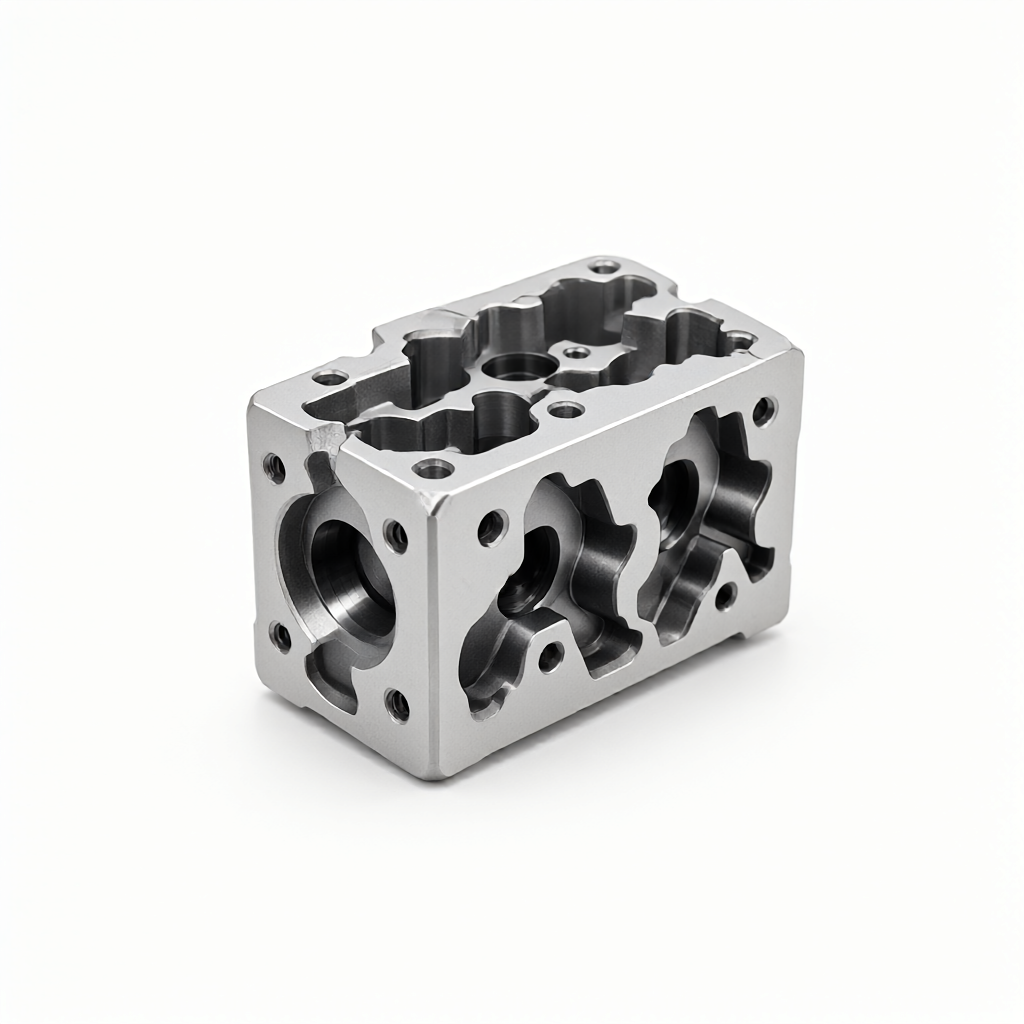
Key Difficulties and Processing Sequence Logic of Five-axis CNC Machining Hydraulic Valve Block
In the five-axis CNC machining of hydraulic valve block, the machining sequence of complex hole series in the inner cavity directly determines the form and position tolerance performance and surface quality of the part. The procurement engineer often ignores the risk of tool interference or insufficient rigid support, resulting in the final valve block scrap or secondary trimming. The core problem lies in: how to plan a stable, repeatable and consistent cutting path under the constraints of multi-direction, deep hole and cross hole.
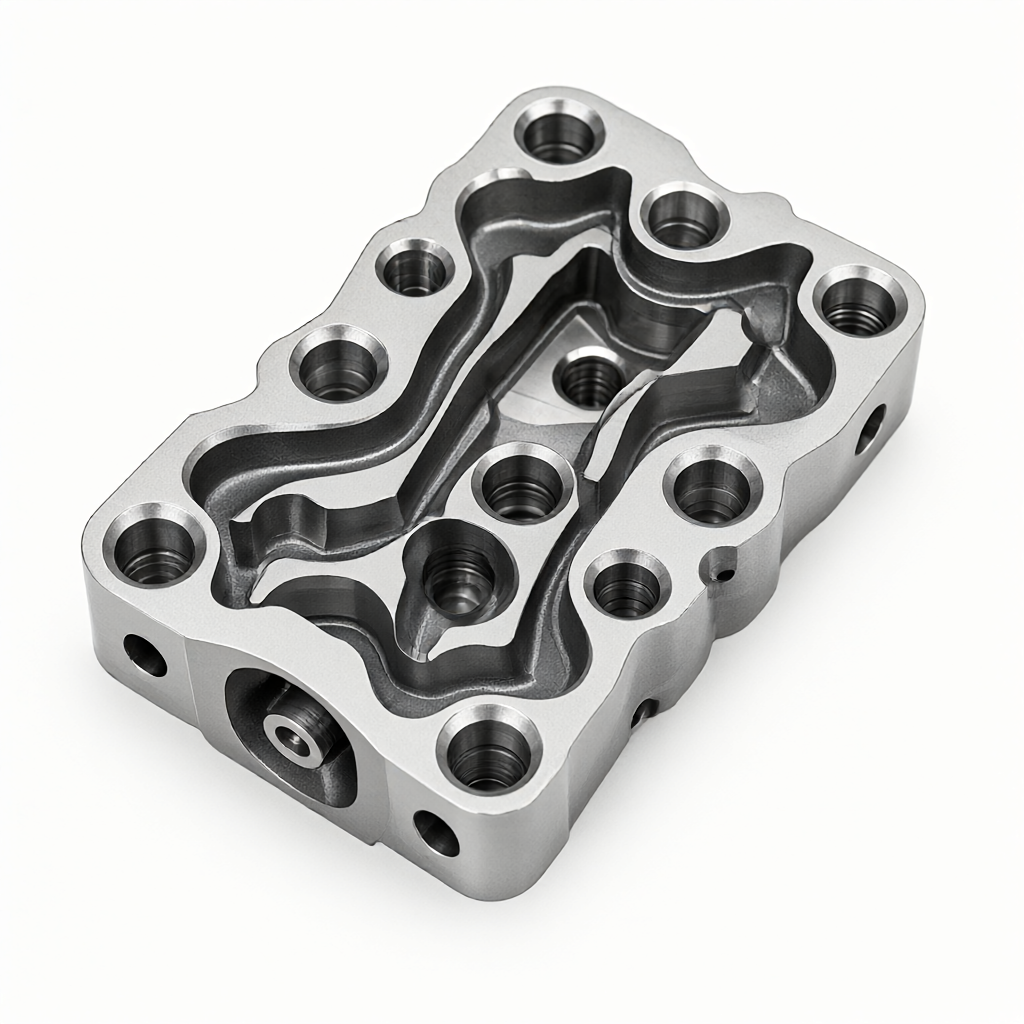
Hydraulic valve blocks are usually made of high-strength alloy steel (such as 42CrMo or 30CrMo) or stainless steel (316L) with a hardness of HRC 30-40. These materials have large cutting forces, poor heat dissipation, and the internal cavity structure often contains multiple inclined holes, cross holes, and blind holes that are not parallel to the main coordinate system. If the machining sequence is not properly planned, the following failure modes are prone to occur:
- tool interference: The collision between the rear tool and the machined surface leads to tool breakage or part surface scratch.
- Let the knife and deformation: The cantilever length is too large, resulting in insufficient rigidity of the tool holder, causing the phenomenon of "tool giving", so that the aperture deviation exceeds ±0.01mm standard.
- Residual stress concentration: the reverse operation of first fine and then coarse leads to unbalanced stress release in the blank, and the size drifts after heat treatment.
Therefore, scientific machining sequence planning is not only a programming skill, but also an engineering foundation to ensure batch consistency. For technical procurement, when evaluating supplier capabilities, we should focus on whether they have simulation verification capabilities based on five-axis linkage, and whether they can provide first-part three-dimensional data and surface roughness reports.
Limitations of Material Properties on Processing Window
The material selection of hydraulic valve block directly affects the cutting parameters and sequence arrangement. 42CrMo steel has good toughness but obvious work hardening tendency. If the cutting speed is too low or the feed rate is too large, the surface will harden rapidly, which makes the subsequent finishing difficult. It is suggested that the rough machining should adopt the strategy of large feed and medium speed, and the finishing should increase the speed and reduce the feed to reduce plastic deformation.
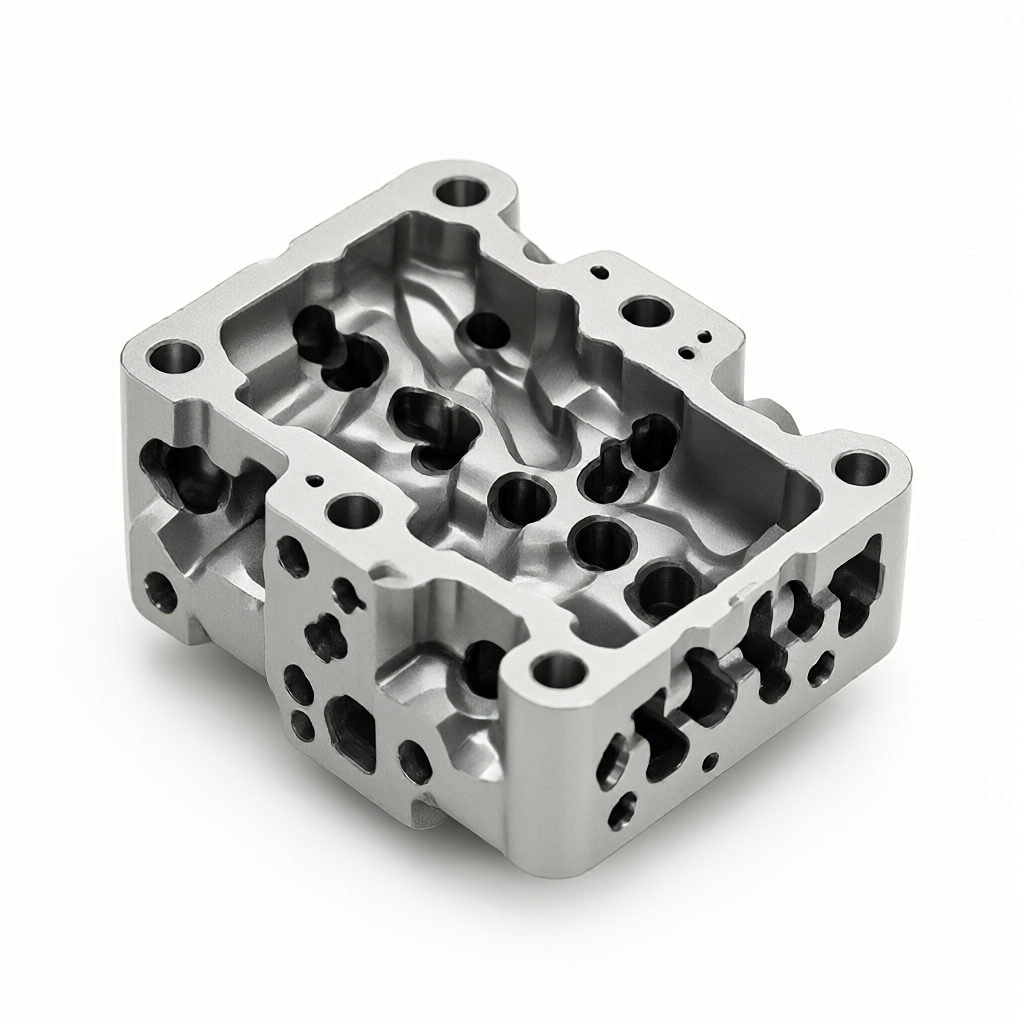
The thermal conductivity of 316L stainless steel is only 1/3 of carbon steel, and the high temperature in the cutting area is easy to cause the tool coating to peel off. In five-axis machining, due to frequent angle changes, the impact load when the tool is re-cut is large, and the short blade length ratio (L/D 0.8) needs to be selected. The cutting angle needs to be adjusted or the extension length of the tool holder needs to be shortened.
Technical procurement should request screenshots of simulation reports and tool stiffness calculations when reviewing supplier proposals, which are key evidence of technical capability rather than drawing size alone.
Acceptance criteria and common defect avoidance
The acceptance of hydraulic valve block is not only size test, but also surface quality and function test. Common defects and avoidance methods are as follows:
size out of tolerance
phenomenon: Deviation of cross hole position>0.05mm.
cause: Clamping deformation or thermal expansion and contraction is not compensated.
evade: Multi-point flexible fixture is used to disperse clamping force; the processing environment temperature is controlled at 20±2℃, or temperature compensation measurement is carried out.
surface tear
phenomenon: Longitudinal or spiral scratches on the inner wall.
cause: Cutting chatter or tool micro-chipping.
evade: Optimize feed ratio to avoid resonance frequency; regularly detect tool wear, set forced tool change times; ensure sufficient coolant flow (>80 L/min) to remove heat.
leakage of sealing surface
phenomenon: Flatness>0.01mm, resulting in gasket seal failure.
evade: Flatness detection using laser interferometer or high-precision level; avoid re-clamping after finishing, using special soft claw or vacuum chuck for final processing.
FAQ: Hydraulic valve block five-axis machining common problems
What is the minimum bore limit for five-axis CNC machining hydraulic valve blocks?
Due to the rigidity of the tool, conventional 5-axis milling can stably machine through holes with a minimum diameter of 3 mm. For machining smaller holes (e.g. less than 2mm), it is recommended to use special drilling centers or laser drilling, or use ultra-short edge micro-milling tools on 5-axis machines, but the cost will increase significantly.
42CrMo steel hydraulic valve block must be heat treated before processing?
Yes. 42CrMo strength and toughness matching requirements are high, usually after quenching and tempering (Quenching and Tempering) to HRC28 -32 range before cutting. Unheat treated blank cutting resistance is large, and the final part size stability is poor.
How to verify whether the supplier's 5-axis machining capability is true?
First article CMM reports (CMM data), measured surface roughness values, and screenshots of tool path simulations are required. In addition, ask if it has online compensation capabilities and if tool wear can be corrected automatically by the probe during machining.
How to ensure interchangeability of hydraulic valve block in batch production?
The key lies in the consistency of fixtures and the repeated positioning accuracy of machine tools. Regular manufacturers should use special fixtures and monitor the process capability index (Cpk>1.33) of key size through SPC (Statistical Process Control) to ensure that the fluctuation of size within the batch is controlled within ±0.005mm.
Does it include surface treatment after processing?
Hydraulic valve blocks usually do not require additional surface treatment, but the internal flow path needs to be electropolished or acid pickled to remove oxide scale and improve corrosion resistance. If appearance requirements, external anodization or spraying can be added, but attention should be paid to the effect of coating on size, coating thickness should be reserved in tolerance.
Conclusion: Engineering thinking from drawings to mass production
The core value of five-axis CNC machining hydraulic valve block lies not only in "whether it can be machined", but also in "whether it can be delivered stably at predictable cost and quality". Machining sequence planning, material matching, simulation verification and process control together constitute the engineering closed loop of precision manufacturing. For procurement and R & D engineers, choosing partners with complete process chain and inspection capabilities is more long-term value than simply comparing prices. If you have complex hydraulic valve blocks or similar precision structural parts, please provide drawings for process feasibility assessment and quick quotation.



