





Electrical Conductivity Foundation and Material Selection Logic of Brass CNC Parts
Brass custom CNC parts are widely used in electrical connections, terminals and high-frequency signal transmission fields. Their core value lies in excellent conductivity, machinability and corrosion resistance balance. The main keyword "brass custom CNC parts" needs to first clarify the material grade difference: commonly used H59 (containing copper 59%) and C36000 (free-cutting brass) conductivity is about 35-40% IACS, much lower than copper (99% IACS), but much higher than aluminum. In precision CNC machining, H59 is the first choice for structural conductive parts due to its stable composition and good cutting performance; while C36000 contains antimony and selenium, and the chips are powdery, suitable for mass machining screw parts, but the conductivity is slightly lower than H59 by about 5-8%.
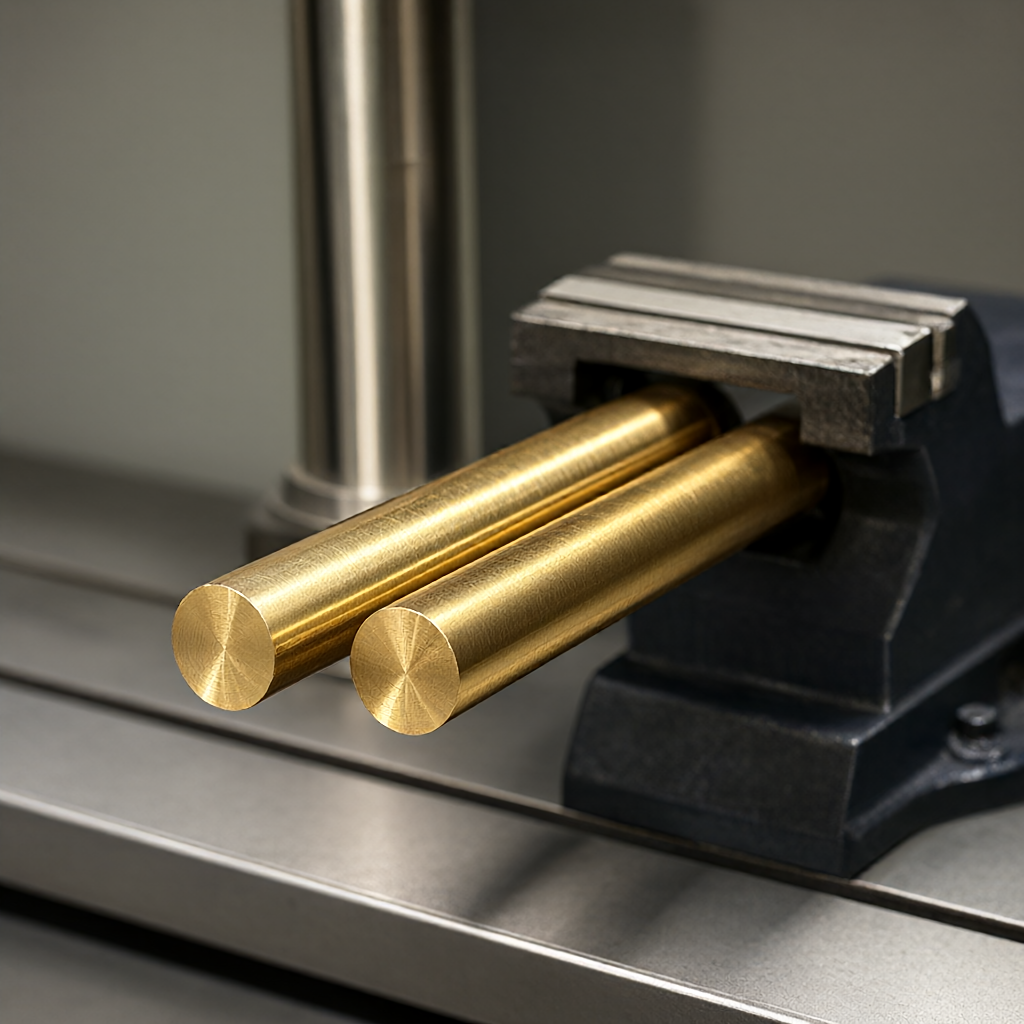
The key to selection is to distinguish between "conductive" and "magnetic" requirements. If the parts involve magnetic circuits or avoid eddy current losses, oxygen-free copper or nickel-copper alloys should be selected; if only used as low-voltage high-current conductive parts, brass is in cost, processing efficiency and strength.(tensile strength of about 310-400 MPa). For batch requirements with surface brightness and high consistency, the milled surface roughness of brass substrates is usually Ra0.8-1.6μm, and Ra0.4μm after finishing or polishing, laying a smooth foundation for subsequent surface protection.
Comparative Analysis of Oxidation Failure Mode and Anti-oxidation Technology
Brass is easy to generate basic copper carbonate patina in the atmosphere, resulting in increased contact resistance and appearance deterioration. Oxidation prevention is not a single process, but a chemical conversion film, physical isolation film or coating is selected according to the service environment of the parts. The following is an engineering comparison of three mainstream brass CNC parts surface treatment schemes:
| process type | Typical film thickness/parameters | salt fog resistance time | conductive effect | applicable scenarios |
|---|---|---|---|---|
| chemical passivation | The film thickness is not clear, depending on the passivation solution ratio. | 96-168 hour | Very low, retains metallic luster | High appearance requirements, mild corrosion resistance, cost sensitivity |
| Nickel plating (chemical/plating) | 3-8 μm | ≥500 hours | Medium, nickel conductivity approximately 65% copper | Strong corrosive environment, need to enhance wear resistance |
| Gold/Silver | 0.5-2.5 μm (gold) / 2-5 μm (silver) | Silver is easy to sulfurize and turn black, gold is excellent | Excellent, gold conductivity is about 70% copper | High reliability electrical signal, high frequency low impedance |
It should be noted that passivation does not increase the thickness of the metal layer and has no effect on the assembly gap. It is a better choice to maintain the original machined appearance of "high bright surface, no scratches"; while nickel plating is strong in corrosion resistance, it will introduce hydrogen embrittlement risk (it takes 85℃ to bake for 48 hours to remove hydrogen), and the surface of the nickel layer is silvery white, which will change the original appearance characteristics of brass.
Influence of CNC cutting parameters on conductivity retention
The conductivity of brass is highly dependent on lattice integrity. Excessive cutting speeds (>300 m/min) and feed rate will lead to work hardening layer thickening, micro-crack propagation, so that local resistivity increases. In 3-axis milling plane and 4-axis linkage machining of special-shaped interface, recommended cutting speed Vc control in 180-250 m/min, feed per revolution f0.08-0.15 mm/rev. The residual stress layer on the surface can be controlled within 5μm by using cemented carbide inserts (C grade) with trace water-soluble cutting fluid to avoid affecting the adhesion of subsequent coatings.

For machining small conductive parts (such as pins and terminals) by centering machine, the spindle speed can reach 8000-12000 rpm, so it is necessary to monitor the back shaft runout (≤0.005mm) to prevent the size out of tolerance and surface vibration caused by vibration. Vibration not only destroys the appearance finish, but also causes the surface micro-unevenness, increases the uncertainty of contact area, and then causes the consistency fluctuation of conductive test batches.
Surface finish and appearance quality control standards
In mass production, appearance quality (high brightness, no defects) is the core of acceptance. Brass parts usually retain knife marks after milling. If mirror effect is required, grinding process needs to be added. The surface roughness of our standard delivery parts is Ra0.4μm. After chemical passivation, there are no oxidation spots and no flow marks on the surface. The key control points lie in the first part confirmation and process inspection: Rz value is measured by roughness meter, and the surface micro scratches are inspected by optical microscope. For turn-milling composite parts, the transition fillet between the inner hole and the end face should ensure R0.5-R1.0mm to avoid stress concentration leading to subsequent plating blistering.
The cleaning process before anti-oxidation treatment is very important. CNC cutting oil residue will hinder the uniform adhesion of passivation film, resulting in local leakage and corrosion. The standard process is: ultrasonic degreasing → pickling degreasing → hot water rinsing → passivation → drying. Record the temperature and time at each step (such as pickling 30-60℃, 5-10 minutes) to ensure process consistency between batches.
Detection Methods and Failure Prevention Strategies
Conductivity test is not only to see the overall resistance, but also to pay more attention to the "contact resistance". For the assembled terminals, the four-wire method is used.(Kelvin sensing) measurement more accurate, eliminate lead resistance interference. Appearance and protective layer detection depends on salt spray test (Refer to GB/T 1771 or ASTM B117). If the edge is found to fail prematurely, it is usually due to incomplete chamfering or deburring after CNC machining, resulting in thin passivation film at sharp corners. It is recommended to specify all sharp edge chamfers C0.2-C0.5mm in the drawings, which not only improves the feel, but also optimizes the film distribution.

CMM is used to verify the critical fit size tolerance (e.g. ±0.01mm) to prevent resistance increase due to insufficient contact pressure caused by large size. Full size inspection and sampling salt spray before shipment form a triple check closed loop of "size-function-appearance" to reduce the defective rate of terminal assembly.
frequently asked questions
Can brass CNC parts be mirror polished?
Yes. By belt polishing or grinding process, brass surface roughness can be as low as Ra0.2μm, showing high brightness effect, but it needs subsequent passivation protection to prevent oxidation darkening.
Does nickel plating significantly reduce the conductivity of brass?
The resistivity of nickel is about 1.5 times that of brass. If the parts bear high current, tin plating or silver plating is recommended; nickel plating is acceptable only for mechanical protection or light load conduction.
What is the MOQ and sample cycle?
Support 1 sample, batch order can be delivered in 15-25 days. The specific delivery time depends on the complexity of drawings, material stock and surface treatment process scheduling, and can be evaluated after providing drawings.
How to avoid oxidation and blackening of brass parts during storage?
It is recommended to coat with microcrystalline wax or vapor corrosion inhibitor (VCI) after passivation to maintain ambient humidity



