CNC precision machining material selection: aluminum alloy and titanium alloy strength comparison
CNC precision machining material selection logic: the core difference between aluminum alloy and titanium alloy
In CNC precision manufacturing, material selection directly determines the mechanical properties, cost structure and machining difficulty of parts. Engineers and purchasers often face confusion: why sometimes choose aluminum alloys (such as 7075) instead of titanium alloys (such as Ti-6Al-4V) and vice versa when strength requirements are similar?Specific strength, machinability, thermal stability and surface appearance consistencyFor mass production, material selection should consider equipment operation rate, tool life and appearance quality control ability.
Depth Comparison of Mechanical Parameters: Specific Strength and Stiffness Analysis
To understand the nature of materials, we need to start with basic mechanical parameters. The following are the key parameters of two typical alloys in CNC machining state:
Comparison of mechanical properties between aluminum alloy 7075-T6 and titanium alloy Ti-6Al-4V
performance index
Aluminum alloy 7075-T6
Titanium alloy Ti-6Al-4V
engineering significance
Density (g/cm³)
2.8
4.43
Aluminum is about 37% lighter than titanium, suitable for weight reduction needs
Tensile strength (MPa)
570
950
Titanium has higher strength and stronger bearing capacity
Specific strength (MPa·cm³/g)
~204
~214
The strength ratio of the two is similar, titanium is only slightly better
Modulus of elasticity (GPa)
71.7
110
Titanium is more rigid and resistant to deformation
Thermal conductivity (W/m·K)
120
6.7
Aluminum heat dissipation is good, titanium is easy to accumulate heat, affecting tool life
The data show that although the tensile strength of titanium alloy is about 1.6 times that of aluminum alloy, its density is also nearly 60%. Therefore, when the design core goal isLightweight and rigidAluminum alloy 7075 is often a better choice for cost performance; if the application scenario involvesHigh temperature environment or extreme static pressure loadThe high temperature strength retention rate of titanium alloy must be considered (aluminum alloy strength drops significantly above 150°C, titanium alloy performance is stable below 300°C).
CNC cutting performance differences: machining efficiency and tool wear
Material machinability is the key to CNC cost control. There is a huge gap between aluminum alloy and titanium alloy in cutting characteristics, which directly affects the machining cycle and tool budget.
Aluminum alloy cutting characteristics
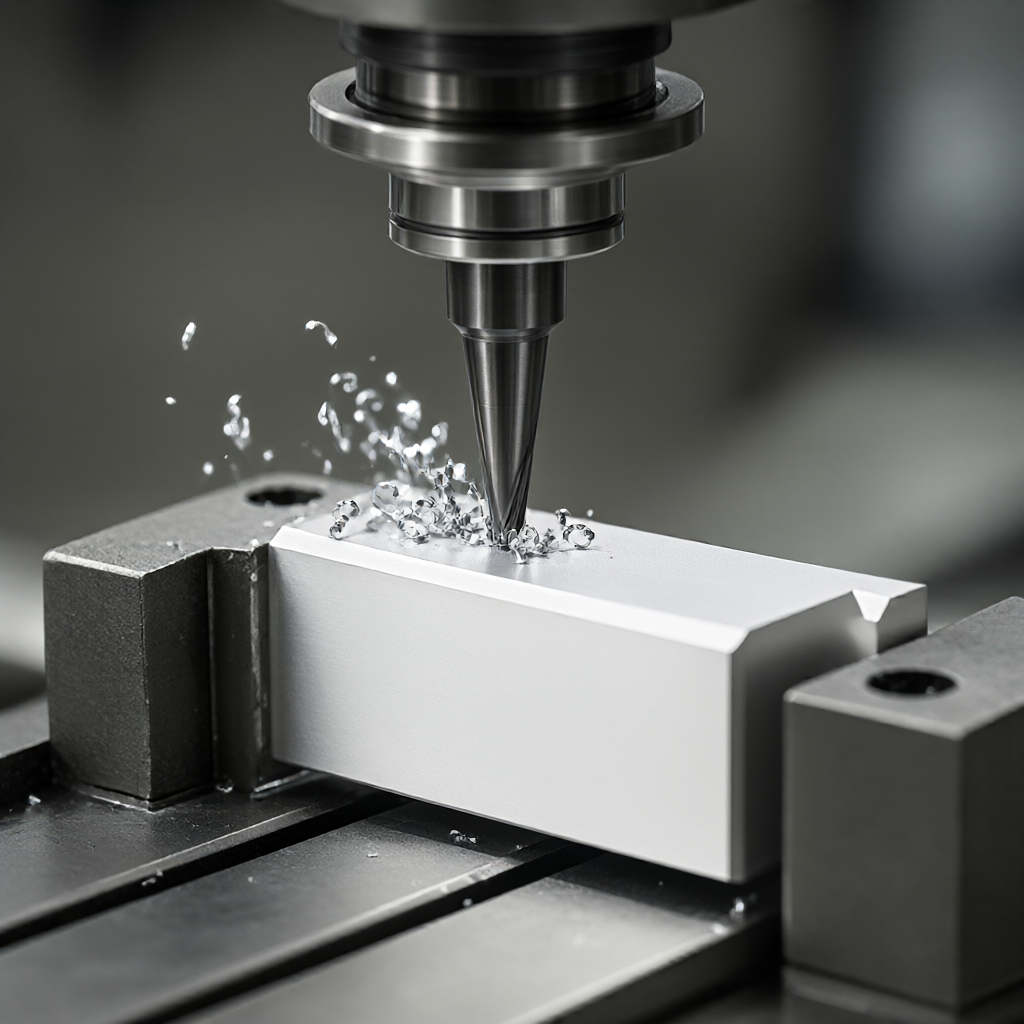
Aluminum alloy chips are soft, easy to stick to the tool, and have high requirements for chip removal. However, due to its high thermal conductivity (about 120 W/m·K), the cutting heat is easy to be taken away by the chips, and the tool temperature is low.
recommended parameters: High spindle speed (up to 10,000 rpm), fast feed, high single-axis milling efficiency.
tool selectionTungsten carbide inserts need to be PVD coated or uncoated TiAlN, large relief angle to reduce contact area, to avoid accumulation.
processing risk: Sticking knives causes rough surface markings. The coolant concentration and flow rate need to be optimized to prevent "aluminum mud" from scratching the surface.
Titanium alloy cutting characteristics
Titanium alloy is a typical hard cutting material. Its thermal conductivity is extremely low (about 6.7 W/m·K), which means thatMore than 90% of the cutting friction heat accumulated in the tip, resulting in rapid tool wear and even failure. In addition, titanium has high chemical activity and is easy to diffuse wear with tool materials at high temperatures.
recommended parameters: Low speed large feed strategy (spindle speed is usually more than 50% lower than aluminum alloy), using the smallest chip breaker blade.
tool selection: Coated cemented carbide (such as TiCN, AlTiN) must be used, and high speed steel is strictly prohibited.
processing risk: The probability of tool chipping is high, so it is necessary to monitor the spindle load in real time; if the feed amount is improper, it is easy to produce "chatter", which affects the size accuracy.
For mass production, the material utilization rate and processing efficiency of aluminum alloy are obviously superior, and the unit man-hour cost is usually only 1/3 to 1/5 of titanium alloy.
Appearance quality and surface treatment compatibility
In many consumer electronics, robotic joints or medical implant scenarios,appearance consistencyThe ultimate strength often affects final acceptance more than ultimate strength. Aluminum alloys and titanium alloys behave differently in surface treatment processes.
Comparison of Surface Treatment Appearance of Aluminum Titanium Alloy
Surface treatment of aluminum alloys;
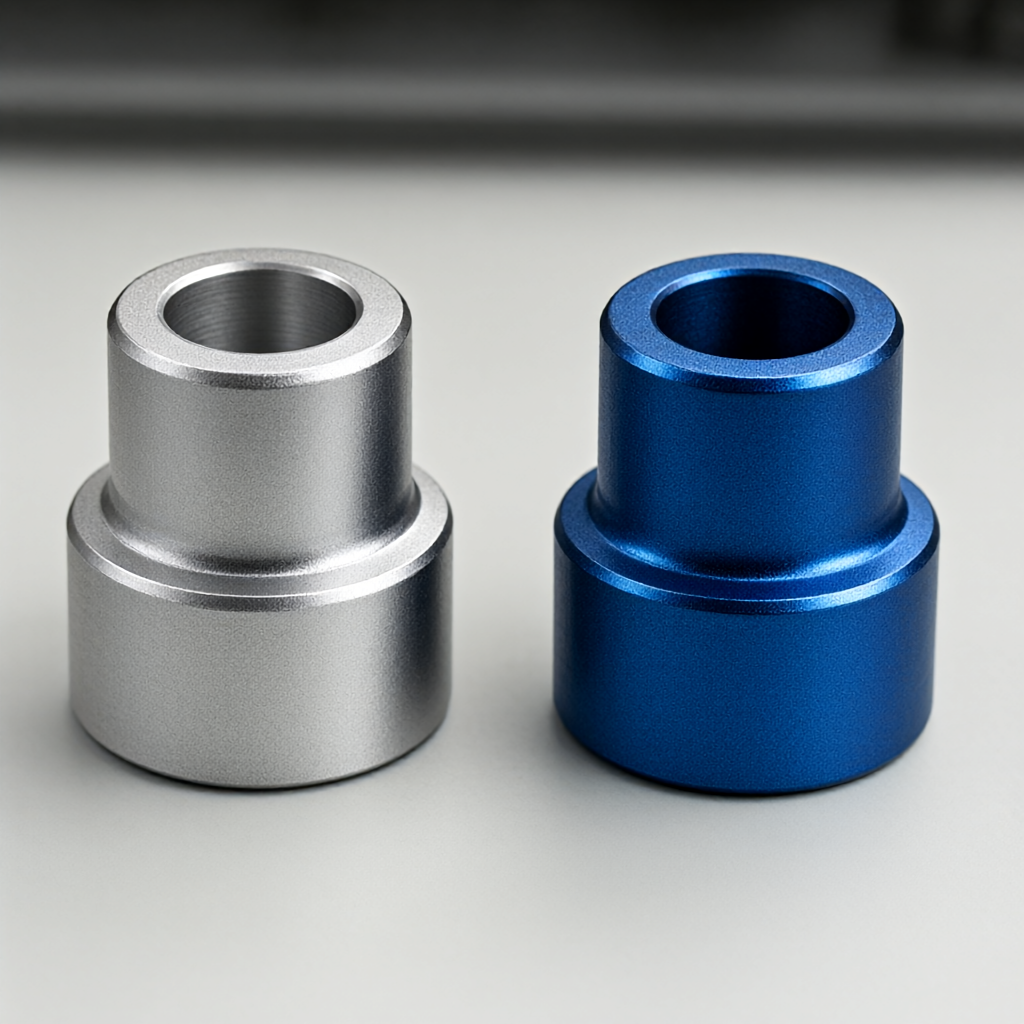
Aluminum alloy oxide film is thin, anodized color controllable (black, gold, color oxidation), but the oxide layer porous, easy to dye uneven.
advantage: High gloss after wire drawing and sandblasting, easy to achieve mirror effect.
inferior position: If the pretreatment is improper, it is easy to have batch differences such as white spots and black spots.
Surface treatment of titanium alloys;
Titanium alloy oxide film dense, transparent, natural corrosion resistance.
advantage: Electroless plating or oxidation color (such as blue, gold thermal oxidation) uniform and firm color, excellent scratch resistance.
inferior position: The machined surface is easy to produce a "work hardening layer", which leads to difficulties in subsequent polishing; the gloss recovery after sandblasting is slow.
For parts with high appearance requirements, if they need to be maintained in mass production,High gloss, no scratches, no flawsAluminum alloy with fine post-treatment (such as electrolytic polishing or mirror polishing) is easier to achieve strict CPK values; titanium alloy is more dependent on the final surface treatment of the machining stage, which requires extremely high operator skills and machine rigidity.
Cost structure and batch lead time assessment
Material costs are just the tip of the iceberg. The true TCO (Total Cost of Ownership) includes blank procurement, machining losses, scrap rates, and inspection costs.
blank priceTi-6Al-4V bars are usually 8-12 times more expensive than 7075 aluminum (market fluctuations).
processing lossAluminum alloy due to fast cutting, single work time is short, mold and equipment depreciation sharing is low; titanium alloy cutting slow, single work time may be 2-4 times that of aluminum alloy.
detection costTitanium alloy parts usually require higher size tolerance (such as ±0.005mm), and due to large thermal deformation, it is necessary to reserve longer cooling time, which affects the production line rhythm.
Aluminum alloy parts have higher scheduling flexibility due to mature processes and readily available materials within a 15-25 day batch lead time. If project nodes are tight, aluminum alloy solutions have a natural advantage in supply chain stability.
Selection Decision Guide: Recommendations Based on Application Scenarios
For specific projects, engineers should screen according to the following dimensions:
Scenario 1: High-strength lightweight structural members
If the part is subjected to high vibration, high impact, and sensitive to weight (such as UAV arm, robot actuator), it is preferred.Ti-6Al-4V. Despite its high cost, its fatigue resistance and high temperature stability are irreplaceable.
Scenario 2: High Turnover Consumer Electronics
If the product iteration is fast, the output is large, and the appearance requirements are high (such as 3C accessories and camera module shells), the preferred choice is7075-T6. Its low cost, easy processing, easy appearance characteristics, can significantly reduce the cost of a single piece, shorten the market cycle.
Efficient aluminum alloy machining scenarios
Scenario 3: Medical implants
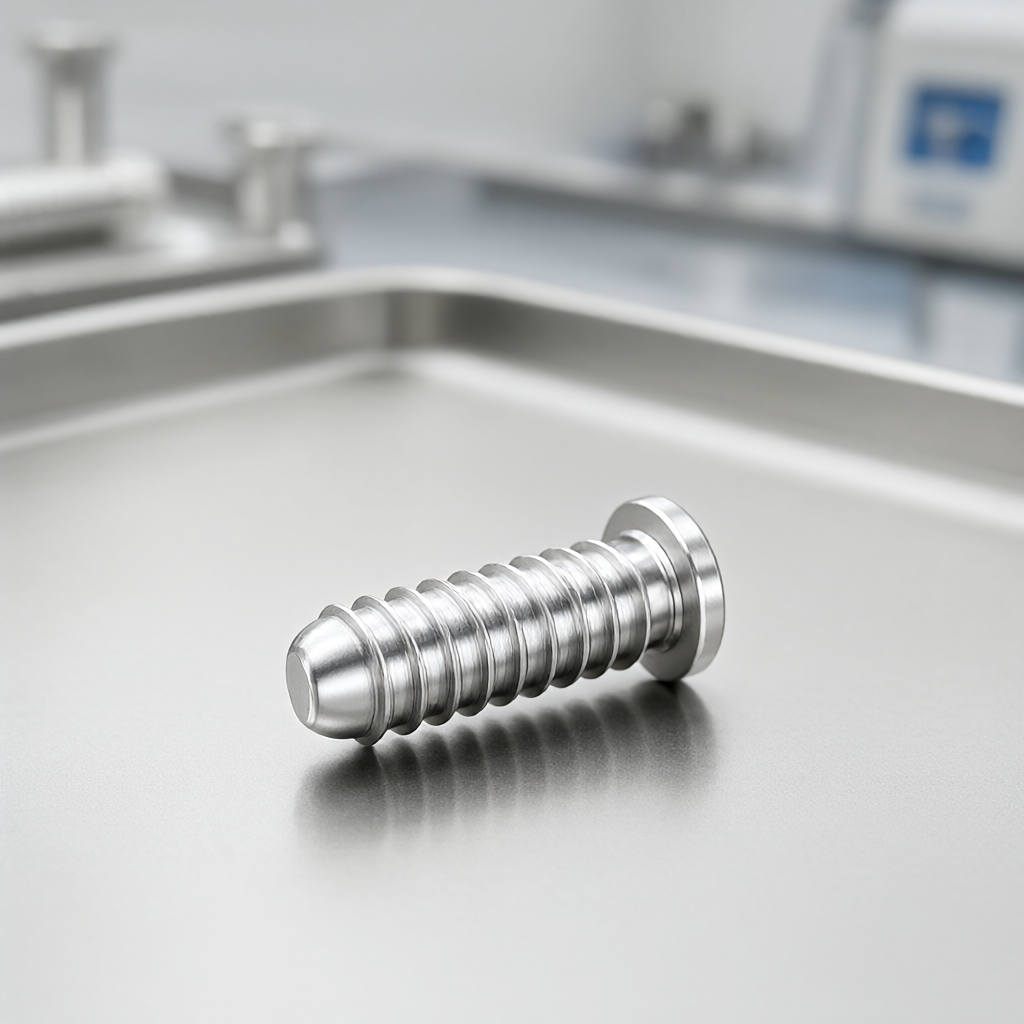
must be selectedPure titanium (CP-Ti Grade 4)or Ti-6Al-4V. Aluminum alloys are not biocompatible and should not be used in implant scenarios. Titanium alloys 'corrosion resistance and non-magnetism make them a reliable choice.
Medical implants Titanium alloy inspection close-ups
Acceptance criteria and test points
Regardless of the material selected, the acceptance of CNC precision parts requires attention to the following parameters:
size accuracy: The tolerance of key mating surface is recommended to be controlled within ±0.01mm.
surface roughness: The appearance surface requires Ra0.4μm or less, usually requiring an additional finish turning or finish milling process.
flaw detectionTitanium alloy parts are easy to produce micro-cracks, it is recommended to carry out penetrant inspection (PT) on the bearing parts; aluminum alloy mainly pays attention to pores and inclusions, X-ray detection is more effective.
material certification: Supplier shall provide complete Mill Test Certificate, specifying alloy grade and heat treatment status.
frequently asked questions
Aluminum alloy 7075 or titanium alloy 6Al-4V in CNC machining which is more likely to scratch the surface?
Aluminum alloy is easy to stick when cutting. If it is not cooled properly, chip rebound is easy to scratch the machined surface. Titanium alloy has high hardness and is not easy to scratch, but tool chipping may cause chipping. Therefore, aluminum alloy needs to pay more attention to chip removal and cooling, titanium alloy needs to pay more attention to tool monitoring.
How to ensure the appearance consistency of aluminum alloy parts in mass production?
The key lies in pretreatment control. After removing oxide scale and grease, unify wire drawing or blasting parameters (such as sand number, pressure, time). It is recommended to conduct anodization test on the first piece to confirm that the batch color difference is within ΔE.
Send your STEP / DWG / PDF drawing and our engineers reply within 2 hours with a detailed quote including free DFM analysis and process recommendations — no obligation.
Send your STEP / DWG / PDF drawing and get a detailed quote with free DFM analysis and process recommendations within 2 hours. No minimum order — from 1 piece.