





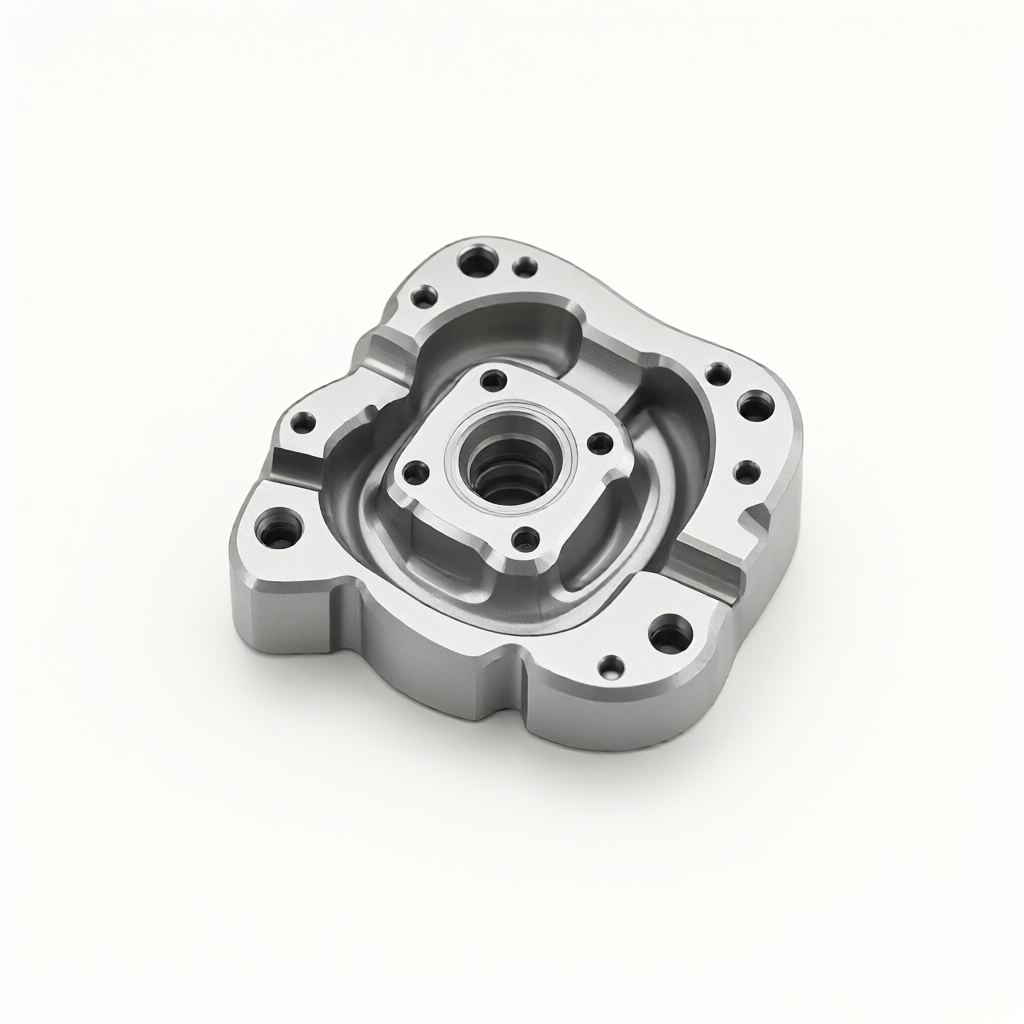
Core process challenges for five-axis CNC machining of medical cavities
In the custom machining of precision CNC parts, five-axis CNC machining of complex medical cavities is a typical requirement to deal with irregular surfaces and deep cavity structures. Medical cavity parts usually require sterile packaging material adaptation, burr-free surface, no scratches, and size tolerance control within ±0.01mm, surface roughness to reach Ra0.4μm or better. Due to the high requirements of biocompatibility and cleanliness of medical devices, traditional three-axis or four-axis machining often has problems such as inter-axis interference, insufficient tool path optimization and low deburring efficiency when processing complex cavities. Five-axis machining can significantly improve tool incidence angle, improve surface finish and reduce support structure by tilting the spindle and swing axis.
Material Selection and Cutting Parameter Optimization
Common materials for medical cavities include 316L stainless steel, titanium alloys (such as Ti-6Al-4V) and PEEK engineering plastics. The differences in cutting performance of different materials directly affect tool life, surface quality and deburring difficulty.
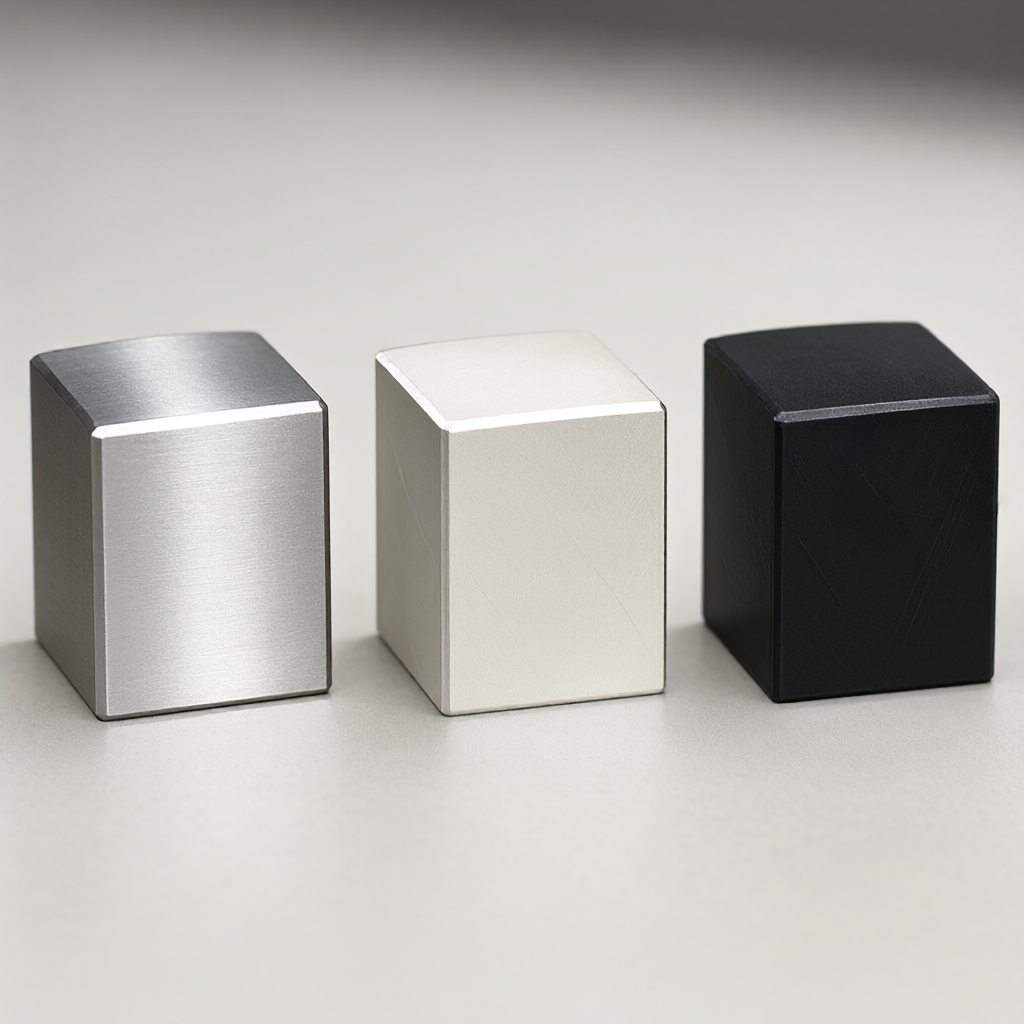
- 316L Stainless Steel: High toughness, poor thermal conductivity, easy to produce chip build-up. It is recommended to adopt a large feed, small cutting depth strategy, spindle speed control in 8000-12000rpm, feed speed 300-500mm/min. The tool recommends carbide coated tools (such as TiAlN coating) to improve wear resistance and chip removal.
- titanium alloy: Low elastic modulus, easy to deform. Need to reduce the cutting speed (500-800m/min), increase the coolant flow, avoid heat accumulation caused by thermal deformation. It is recommended to use micro-machining parameters, step distance 0.05-0.1mm, to ensure the accuracy of the surface.
- PEEK engineering plastic: Melting point is about 343℃, easy to stick tool. Sharp tool (such as single crystal diamond or CBN) should be selected, high speed and low feed (10000-15000rpm, feed 200-300mm/min) should be maintained, and air cooling should be used to prevent thermal deformation.
Parameter optimization needs to be combined with five-axis linkage simulation software for collision detection and tool axis strategy adjustment to ensure that the tool always maintains a better cutting angle in the deep cavity area to avoid vibration and tool yield.
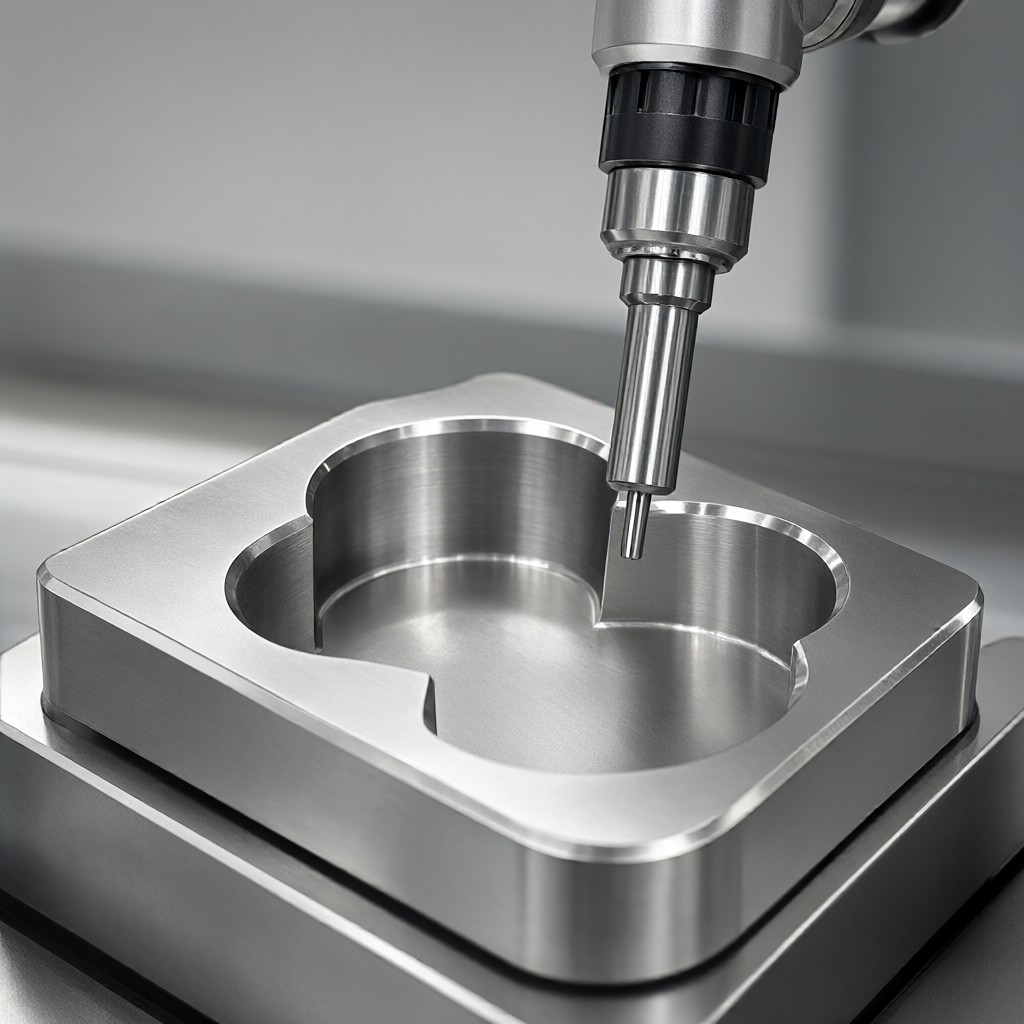
Five-axis linkage tool path and inter-axis strategy
When machining complex medical cavities with 5-axis CNC, tool path planning is the key to determining surface quality and efficiency. Common strategies include:
- spiral cutting: Suitable for cavity milling, can maintain a constant cutting load, reduce tip stress, reduce surface residual stress, help subsequent aseptic cleaning.
- Z-direction equidistant milling: Suitable for finish machining, achieving a surface roughness of Ra0.4μm by controlling the step length (usually 0.02-0.05mm). It is necessary to cooperate with a smooth transition tool path to avoid tool marks.
- Five-axis fairingContinuous five-axis motion is used in the curved surface area to keep the spindle inclination constant (such as 45°-60°), improve tool rigidity, reduce overhang vibration, and thus obtain more uniform surface quality.
Tool path optimization also needs to consider the deburring process reservation. In sharp edges or deep cavity corners, pre-deburring grooves or chamfers can be designed to avoid surface damage caused by subsequent manual deburring. Five-axis machine tools do not need to flip the workpiece during positioning, reducing clamping stress and helping to maintain size stability.
Comparison of Deburring Process and Sterile Adaptability
Deburring is a pre-process for the qualification of medical parts. Different methods have a significant impact on surface integrity, biocompatibility and compatibility of sterile packaging materials. The following table compares three mainstream deburring solutions:
| method | applicable scenarios | Residual surface risk | Compatibility of sterile packaging materials | cost and efficiency |
|---|---|---|---|---|
| vibration deburring | Porous, deep cavities, complex internal pores | Low, but need to control abrasive particle size (≤325 mesh) to avoid scratches | High, easy to clean residual abrasive | Medium, good batch consistency |
| laser deburring | Sharp edge, thin wall, high temperature alloy | Very low, no contact, no heat affected zone | Very high, no consumable residues | High, suitable for high-precision medical parts |
| Electrochemical Deburring (ECM) | Deep holes, slits, conductive materials | Low, but need to control electrolyte ratio and current density | Clean electrolyte residue thoroughly | Medium, suitable for titanium/steel alloy |
When selecting the deburring process, it is necessary to combine the material characteristics with the subsequent sterilization method.(such as ethylene oxide or radiation sterilization). Laser deburring is suitable for high cleanliness requirements because it has no contact and no consumables. Vibration deburring is suitable for complex cavities, but it is necessary to strictly screen abrasive particle size to prevent micro-particle residues from affecting biocompatibility testing. Electrochemical deburring is effective for conductive materials, but electrolyte residues need to be removed by multiple ultrasonic cleaning and pure water rinsing, and it is necessary to detect whether ion residues are lower than medical standard limits.
Verification of compatibility between surface treatment and sterile packaging materials
After deburring, medical cavities are often surface treated to further improve corrosion resistance and biocompatibility. Common processes include:
- sand blast: Use 150-325 mesh alumina or glass beads, pressure control in 0.3-0.5MPa, surface roughness target Ra0.8-1.6μm. After sandblasting, pickling passivation is required to remove the surface contamination layer.
- Anodic oxidation (aluminum alloy): Suitable for aluminum-based medical parts, film thickness 5-10μm, can be dyed or sealed. Ensure that the sealing process is complete to prevent residual cleaning solution in pores.
- electroplate: such as nickel-phosphorus alloy coating (2-5μm), improve wear resistance and corrosion resistance. After plating, hydrogen embrittlement release (such as 200℃/4h) and salt spray test verification.
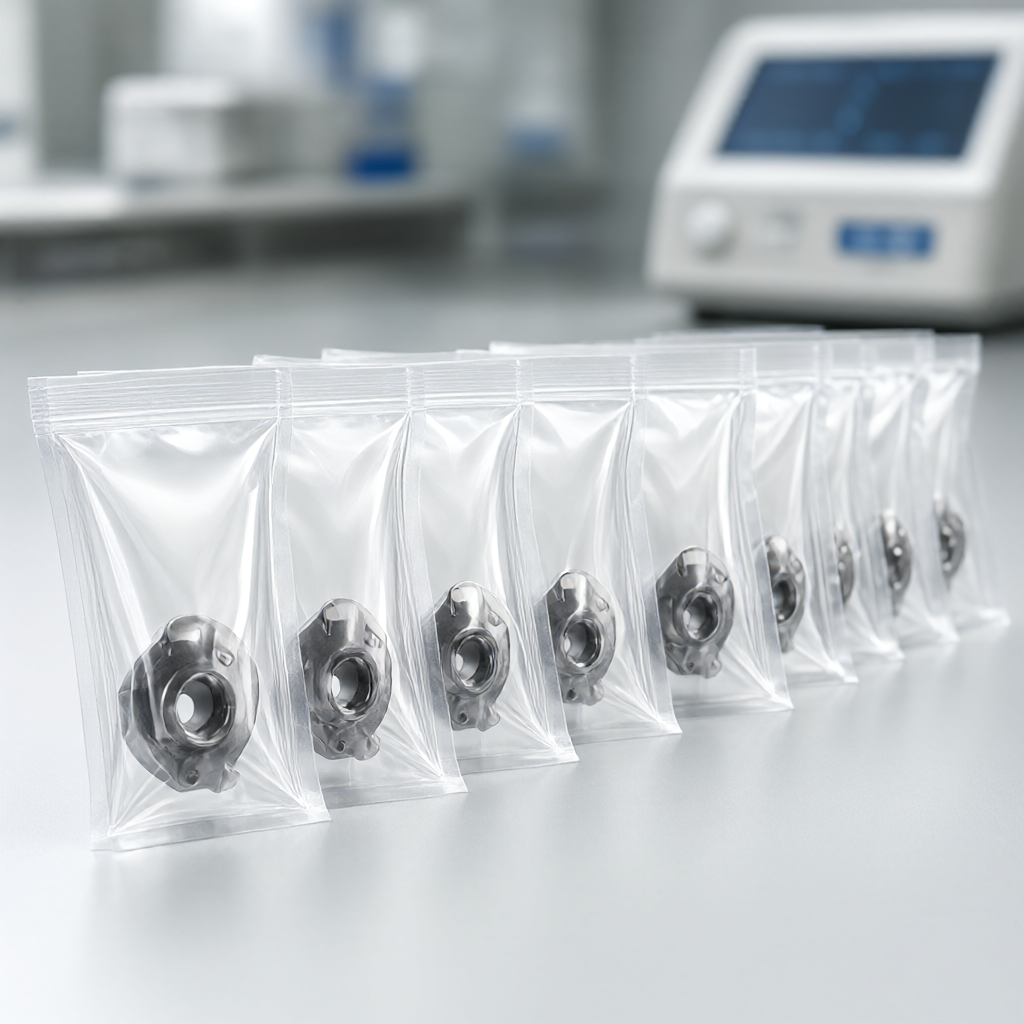
After all surface treatment processes are completed, the compatibility of sterile packaging materials shall be verified. Packaging materials (such as medical grade PE bags or paper-plastic composite bags) shall be ensured not to be damaged or contaminated by microbumps, static electricity or residues on the surface of parts. Transportation simulation test and sealing test are recommended to verify that the surface integrity of parts remains unchanged after sterilization cycle and there is no precipitate.
Detection criteria and failure avoidance
The final acceptance of medical cavity parts is based on strict quality inspection standards. Key inspection items include:
- size detection: Use a three-coordinate measuring machine (CMM) or optical projector to detect the tolerance of key points, with a target of ±0.01mm. The CMM probe needs to use a ruby sphere diameter (R0.5mm) to improve the accuracy of deep cavity measurement.
- surface roughness: Use white light interferometer or contact roughness meter, target Ra0.4μm (finish machining) or Ra0.8μm (after blasting). Multi-point measurement is required in different profile areas to avoid local deviation.
- cleanliness inspection: Particle counting according to ISO 16232-1 or chemical residue testing according to VDA 19. Deburred and surface-treated parts are cleaned ultrasonically to ensure no metal chips, abrasives or electrolyte residues.
- BC (biocompatibility): The final finished product shall pass ISO 10993 series of tests (cytotoxicity, sensitization, irritation, etc.) to ensure that the materials and processing processes are free of toxic precipitation.
Common failure modes include: residual burrs in deep cavity corners, blistering on surface treatment layer, surface scratch after deburring, and slight size change after sterilization cycle. Avoidance schemes include: reserving deburring process margin during five-axis machining; acid pickling activation before surface treatment; using laser or vibration deburring instead of manual operation; and high temperature size stability test (simulated sterilization temperature ±10℃) before sterilization.
FAQ: Key questions about five-axis CNC machining medical cavities
Can five-axis CNC machining meet the sterile packaging material adaptation requirements of medical cavities?
Yes. Five-axis machining reduces clamping stress and surface defects by optimizing tool paths. With laser or vibration deburring and strict cleaning procedures, it can ensure that there are no residual contaminants on the surface of parts and meet the sealing and cleanliness requirements of sterile packaging materials.
Which deburring method is best suited for 316L stainless steel medical cavities?
Laser deburring is the best solution for 316L stainless steel medical cavity because of its no contact, no consumable residue and small heat affected zone. If the cavity structure is complex, vibration deburring can be combined, but the abrasive particle size should be controlled and thoroughly cleaned.
How to achieve Ra0.4μm surface roughness in five-axis machining?
It is necessary to adopt finish machining parameters (step distance 0.02-0.05mm, moderate cutting speed), combined with five-axis linkage smooth machining strategy, and keep the tool sharp and the thermal stability of the machine tool. Avoid secondary clamping after finish machining to reduce the risk of surface scratches.
How to verify whether the electrolyte residue is up to standard after deburring?
Ion chromatography or ICP-OES can be used to detect surface ion residues, and target values must meet medical cleanliness standards (e.g. total residues



