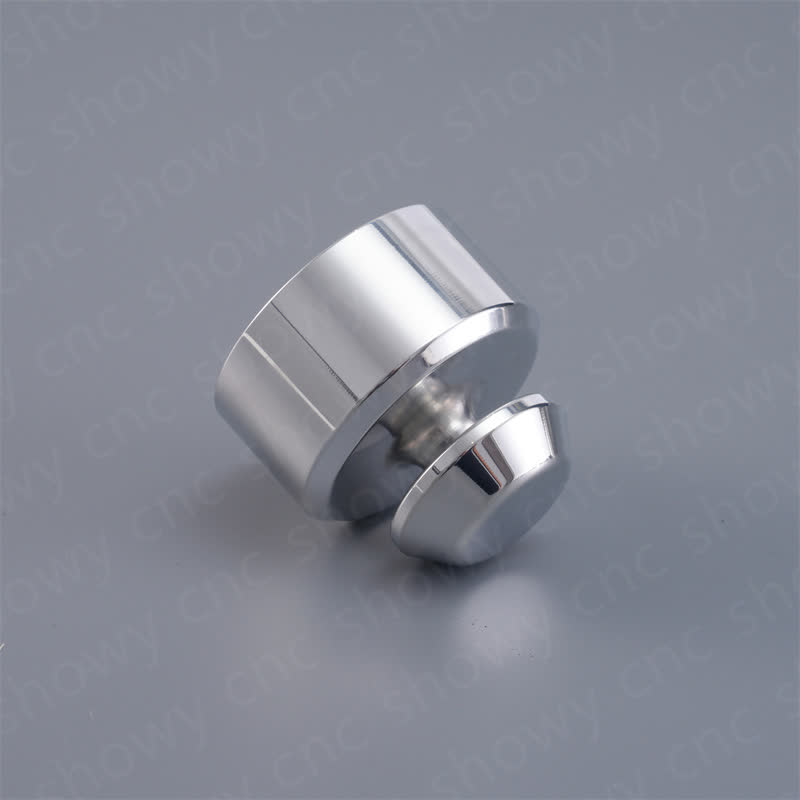


Robot battery compartment parts: explosion-proof materials and sealing structure design points
In mobile robot, AGV and collaborative robot systems, battery compartment is the core structural component of integrated battery pack, BMS and connector. Its design directly determines the safety redundancy and long-term reliability of the system. Engineers need to pay attention to it.explosion-proof materialMechanical properties andsealing structureThe aging resistance ability of the machine, while taking into account the size accuracy (±0.01 mm) and surface finish (Ra 0.4 μm) after CNC machining, to ensure assembly airtightness and appearance consistency. This article will analyze the mainstream material selection logic, sealing principle and precision machining process control points.
Explosion-proof material selection: balance between aluminum and engineering plastics
The battery compartment shell faces the risk of short-circuit ignition, thermal runaway splash and mechanical shock. The material needs to have low thermal conductivity or high melting point and meet the test requirements of IEC 60335-1 or UN 38.3. At present, the mainstream solutions are divided into two categories: high conductivity and heat dissipation type and insulation flame retardant type.
Application boundary of aluminum alloy 6061-T6 and 7075-T6
- 6061-T6: conductivity of about 40% IACS, suitable for both heat dissipation and strength of the scene, CNC cutting performance is good, tool life is long.
- 7075-T6Higher strength (tensile strength ≥ 570 MPa), but poor conductivity and obvious work hardening tendency, suitable for the main frame with large force, need to control the cutting speed at 300-500 m/min.
- surface treatmentAluminum must be anodized (10-15 μm thickness) to improve corrosion resistance, and the dense layer of oxide film can effectively block electrolyte penetration.
Insulation Advantages of Engineering Plastics PA66+30%GF
PA66 +30%GF (glass fiber reinforced nylon) is preferred for 48V/72V systems with stringent high voltage insulation requirements. Its dielectric strength is> 30kV/mm, V-2 flame retardant, and its weight is only 35% of aluminum. Injection molding can achieve complex cavity structures, but attention should be paid to the effect of water absorption on size stability of the material. It is recommended to process after drying treatment.
Seal structure design: air tightness and waterproof grade
The battery compartment needs to meet IP67 or even IP69K protection level. The sealing structure is the key to prevent moisture, dust intrusion and thermal runaway gas leakage. Seal failure usually results from design tolerance accumulation or improper material compression rate.
Comparison of O-rings and lip seals
| characteristic | O-ring seal | Lip/Magnetic Seal |
|---|---|---|
| applicable clearance | 0.05-0.15 mm | 0.01-0.03 mm |
| high pressure resistance | Medium (auxiliary support ring required) | High (suitable for rotating shaft) |
| life management | Depends on compression ratio 15-20% | labial wear rate dependent |
| processing difficulty | Low (CNC milling can be) | High (finish turning/grinding mating surfaces required) |
design suggestions: Static seal is preferably FKM (fluorine rubber) O-ring, temperature range-20℃ to 200℃; dynamic seal (such as charging cap) is recommended to use TPU or FFKM lip seal to ensure long-term pre-tightening force. CNC machining seal groove, groove depth tolerance should be controlled within ±0.05 mm, to avoid over-tightening caused by long-term deformation of rubber.
CNC Precision Machining Technology and Tolerance Control
Battery compartment parts usually involve multi-axis machining, especially shell with ribs, fins and irregular joints. The process path directly affects the final assembly yield.
Application of 5-axis Milling in Complex Shell
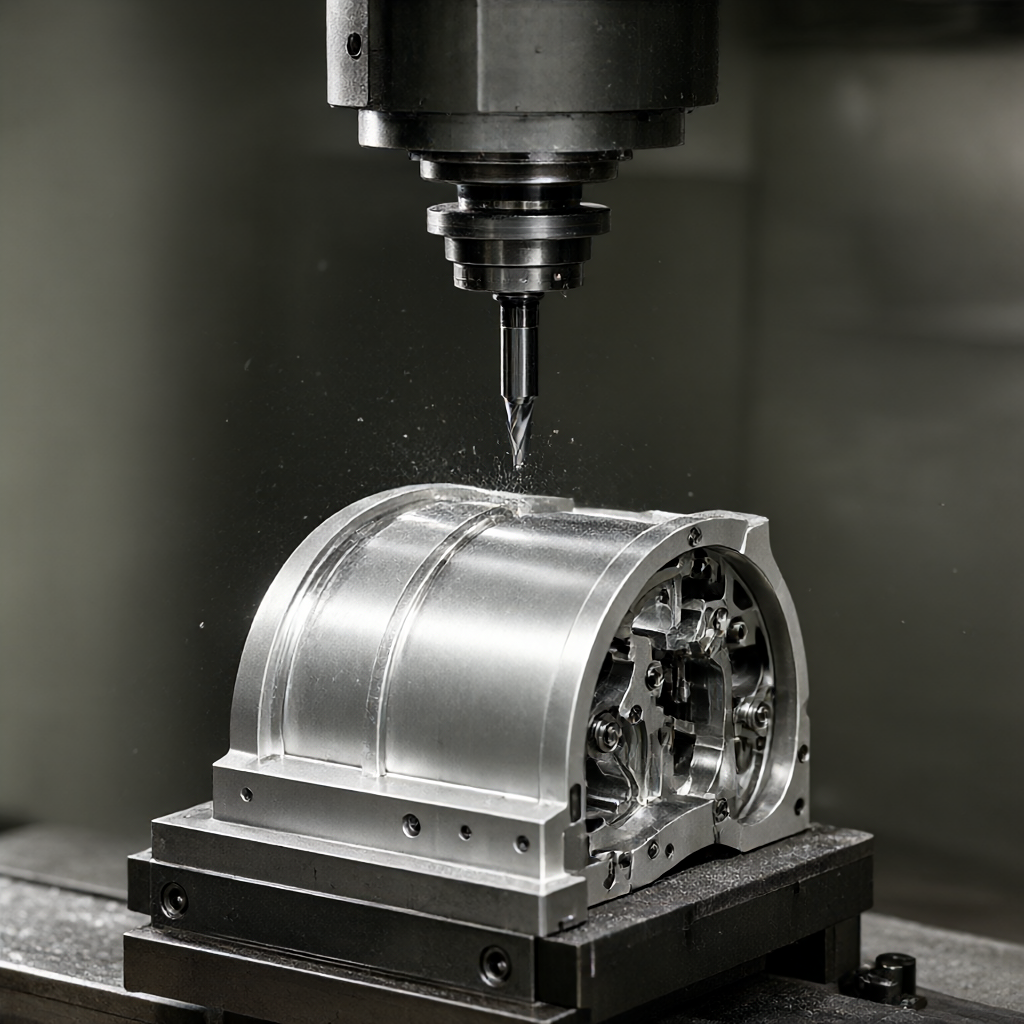
5-axis machining center can reduce datum conversion error for complex curved shells assembled in one time. It is suggested that CMM full size scanning be used for first part inspection, and the depth of sealing groove, flatness of BMS installation surface (≤0.05 mm) and concentricity of connector positioning hole (≤0.02 mm) should be monitored emphatically.
Surface finish and appearance consistency
The high gloss surface not only improves the appearance, but also prevents oil adhesion and facilitates subsequent cleaning and maintenance. For the external finish, Ra ≤ 0.4 μm is required, and the finish milling (0.05-0.1 mm cutting depth) is usually used to fully lubricate the coolant. In batch production, SPC statistical process control is required to monitor tool wear to ensure that each batch of parts has no scratches and no cutting marks.
Failure Mode Analysis and Avoidance Strategy
Based on the field after-sales data, the common failure modes and engineering countermeasures of battery compartment are as follows:
- seal groove deformation: Due to CNC machining groove bottom fillet is too large or depth is out of tolerance. Avoidance: increase groove bottom R0.5 chamfer, depth tolerance tightened to ±0.03 mm.
- thermal expansion and contraction cracking: Plastic parts impact cracking at low temperature of-40℃. Avoid: choose high impact PA66 grade or increase wall thickness to avoid sharp right angle stress concentration.
- electrochemical corrosion: aluminum parts and steel screws in direct contact. Avoid: the use of insulating spacers or plating treatment, isolation of different potential metals.
Batch production delivery and quality inspection standards
Precision CNC machining depends on equipment load rate and scheduling efficiency. Taking 72 CNC clusters as an example, batch orders can be delivered quickly in 15-25 days. Quality control runs through the whole process:
- incoming inspection: Spectrum analysis of aluminum rod/plastic particle grades to confirm material composition compliance.
- first article confirmation: CMM full size report, critical seal size double retest.
- process inspection: Sample the surface roughness and appearance every 2 hours, and record the tool life.
- Full inspection of shipment: 100% air tightness test (inflation 10kPa, pressure holding 1min, pressure drop)< 500Pa)。
Frequently Asked Questions (FAQ)
How much can CNC machining tolerance of robot battery compartment parts be stable?
The normal size tolerance can be controlled within ±0.01 mm. It is recommended to leave a unilateral clearance of 0.02 mm on the key sealing mating surface to ensure smooth installation of O-ring and moderate compression rate.
Aluminum alloy battery compartment shell must be anodized?
It is recommended to do. Anodic oxide film thickness of 10-15 μm can significantly improve salt spray resistance (≥96h) and reduce assembly friction, which is the mainstream specification in the industry.
How does the plastic battery compartment meet the explosion-proof certification requirements?
It is necessary to select flame retardant grades above V-2, and pass UN 38.3 thermal runaway splash test. It is recommended to design pressure relief channels on the structure to prevent internal pressure accumulation.
How does mass production ensure consistency of appearance finish?
By fixing the tool path, setting the tool compensation value, and performing SPC monitoring Ra value (target 0.4 μm), it is ensured that the appearance difference between batches is less than 5%.
How long does the proofing cycle take?
Complex battery compartment parts usually take 5-7 days to sample, including programming and first article inspection, flexible scheduling with R & D nodes.
Conclusion and Inquiry Proposal
The design of battery compartment parts is an intersection of materials science, fluid sealing and precision machining. Choosing a manufacturing partner with 5-axis machining capability, strict SPC control and a fast delivery system (15-25 days) can significantly reduce project risk. It is recommended that seal groove tolerances and surface finish indicators be clearly written on drawings and that the first CMM report be requested as a basis for production release.
To evaluate the machinability of your battery compartment drawings, please send CAD files and BOMs for process feedback and quotations within 24 hours.