

Synergistic requirements for CNC machining and heat treatment of high strength steel for auxiliary instruments of operating table
In the field of medical auxiliary devices, high-strength steels such as 4140, 4340 or 15-5PH are often used for components related to operating tables (such as locking mechanisms, guide rods, and support arms). The tensile strength of such materials is generally in the range of 1000-1700 MPa, and the hardness can reach HRC 45-52 after heat treatment. For precision manufacturing, the core difficulty is not a single process, butSynergistic control of machined morphology and size stability after heat treatment. If CNC machining allowance is insufficient or residual stress distribution is uneven, heat treatment deformation will lead to critical mating surface size out of tolerance. This paper analyzes how to ensure batch consistency through process design from four dimensions: material selection, process parameters, deformation control and inspection and acceptance.
Material properties and cutting parameters: differential treatment of 4140 and 15-5PH
The cutting performance of different high strength steels varies significantly, which directly determines CNC machining efficiency and tool life. 4140 chromium-nickel alloy steel has good machinability in pre-hardened state (HRC28 -32) or annealed state, but it is difficult to re-cut after quenching;15- 5PH maraging steel has the advantage of "machining first and aging later", allowing aging treatment after CNC finishing to improve strength, and size stability is better than traditional quenched steel.
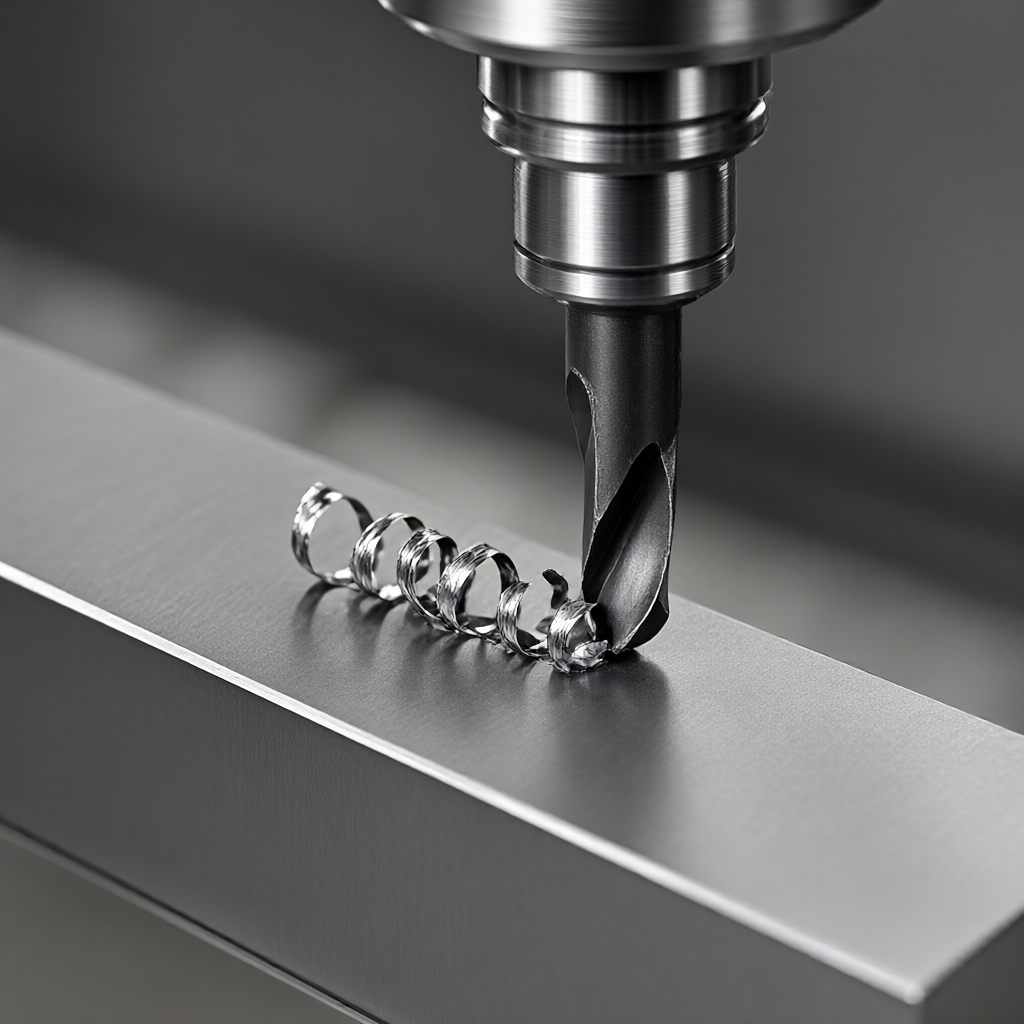
- 4140/4340 (pre-hardened/quenched): Recommended hardness HRC 28-32. Cutting speed Vc 120-150 m/min (cemented carbide coated tool), feed F 0.15-0.20 mm/rev. Need to pay attention to the spindle power of the machine tool to avoid vibration caused by low speed and high torque.
- 15-5PH (solid solution processing): Recommended hardness HB 200-220. Cutting speed Vc 80-100 m/min, feed F 0.10-0.15 mm/rev. Solution + aging immediately after processing, hardness after aging can reach HRC 44-48, tolerance can be achieved without secondary grinding.
Engineers should pay attention to: 15-5PH will produce trace volume shrinkage (about 0.01%-0.02%) during aging, CNC programming must reverse compensation for this tolerance zone, otherwise the fit gap may be too large after heat treatment.
Heat Treatment Deformation Mechanism and CNC Reservation Strategy
heat treatment deformation of high strength steel is mainly due to volume expansion and stress release cause by martensitic transformation. for auxiliary instruments of operate table, critical functional surfaces (such as locking pin mating surface and hinge shaft hole) are extremely sensitive to deformation. that traditional method is "CNC full size → heat treatment → grinding correction," but this increases the process and may introduce grinding cracks. the better strategy isCNC reservation + heat treatment + precision grinding/polishingor"CNC near net shape + aging"。
Reserved quantity design needs to be based on empirical database and trial production feedback:
- Hardened steel (4140): 0.05-0.10 mm reserved for critical mating surface and 0.15-0.20 mm reserved for non-critical surface. Too large a reservation increases grinding burden, and too small a reservation cannot correct deformation.
- Aging steel (15-5PH): Due to the extremely small aging deformation, CNC can be directly processed to the final size or reserved 0.02-0.03 mm for micro-correction, greatly reducing the grinding process.
In addition, CNC machining sequence should follow the principle of "first rough and then fine, first main and then secondary", roughing releases most of the internal stress, and finishing is carried out under stable stress conditions, which can reduce the risk of heat treatment warpage.
Process comparison: traditional quenching and tempering route vs. aging steel route
In order to clarify the basis for selection, the following table compares the key indicators of 4140 conditioning route and 15-5PH aging route in the application of operating table instruments:
| Compare Dimensions | 4140/4340 quenching and tempering route | 15-5PH aging route | Recommended scenarios |
|---|---|---|---|
| final hardness | HRC 28-32 (quenching and tempering)/ HRC 45-52 (quenching + tempering) | HRC 44-48 (after statute of limitations) | 4140 for high wear resistance and high impact; 15-5PH for high rigidity and light weight |
| heat treatment deformation | Larger (0.05-0.20mm reserved) | Very small (0.02mm or zero reserved) | Select 15-5PH for strict tolerances and multiple mating surfaces |
| CNC machining window | Prehardened (HRC28-32) or annealed | Solid solution state (HB200-220) | 15-5PH Higher machining efficiency and longer tool life |
| subsequent process | Critical surfaces to be corrected by grinding | Can be used directly or micropolished | 15-5PH process chain is short and the cost is lower |
| stress corrosion | medium | Excellent (maraging structure more stable) | Recommended for medical high-frequency use environment 15-5PH |
From a B2B procurement perspective, if the project pursues delivery speed and design freedom, the "near net shape" advantage of 15-5PH can shorten the post-treatment cycle by 20-30%; if the budget is limited and the impact toughness requirements are extremely high, 4140 is still a mature choice.
Critical size control and surface integrity requirements
Operating table aids are directly related to patient safety, and surface integrity is critical. In CNC machining, chip residues or microcracks may propagate as a source of failure during heat treatment. Therefore:
- cutting parameter optimization: Precision machining feed control in 0.05-0.10 mm/rev, spindle speed matching tool Dmin, to avoid uneven patterns caused by low frequency vibration.
- tool management: Using coated cemented carbide (TiAlN) or CBN, the finishing tool wear VB≤0.15mm must be replaced to prevent grinding burn effect.
- stress relief aging: After CNC roughing, before finishing, it is recommended to carry out 600-650°C×2h stress annealing (for 4140), or 15-5PH solution treatment after solution, before CNC to stabilize the matrix structure.
Surface roughness requirements: mating surface Ra≤0.8μm, non-mating surface Ra≤3.2μm. If the design requires mirror effect (such as optical guide surface), it is necessary to increase the grinding or super polishing process after CNC to Ra≤0.2μm.
Detection Acceptance Criteria and Common Failure Avoidances
Acceptance depends not only on size, but also on size stability and surface quality. Recommended testing process:
- Three Coordinates (CMM): Conduct full size test on key mating surface, concentricity and flatness, with tolerance of ±0.01mm.
- roughness tester: Spot check surface finish to ensure no vibration marks and scratches.
- hardness testRockwell C scale (HRC), sampling 3 points per piece, average value up to standard and minimum value ≥ lower limit.
- Magnetic particle/penetrant inspection: Conduct surface nondestructive inspection on stress concentration parts (such as orifices and corners) to eliminate cracks.
Common Failure Modes and Avoidances: deformation deviation: Due to insufficient reserve or improper hot clamping. Avoidance: Use soft claws or stress-free clamping to increase the feedback of deformation data of trial parts.
Surface oxidation color deep: Quenching oil contamination or improper cooling. Avoid: Use vacuum quenching or protective atmosphere heat treatment, thoroughly remove oil before CNC machining.
size drift: Aging steel still has a slight shrinkage in the early stage of service. Avoidance: Stabilizing aging (480-485°C×2h) before delivery to ensure that the size freezes.
FAQ: CNC machining and heat treatment of high strength steel
4140 steel must be pre-hardened before CNC machining?
Not necessary, but pre-hardening to HRC 28-32 significantly improves cutting efficiency and surface finish, avoiding tool marks caused by annealing. If the part structure is complex, pre-hardening can shorten finishing time.
15-5PH aging can also be CNC machining?
No. After aging, the hardness reaches HRC 44-48, far exceeding the conventional CNC cutting capacity. CNC finishing must be scheduled before aging or corrected by grinding.
To what extent can heat treatment deformation be controlled?
By optimizing the allowance, vacuum quenching and stabilizing aging, the total deformation of critical surface can be controlled within ±0.02-0.03mm, meeting the tolerance zone requirement of ±0.01mm (after allowance compensation).
How does surface roughness Ra 0.4μm affect heat treatment?
Ra 0.4μm is an excellent level that CNC finishing can achieve, and the surface needs to be protected before and after heat treatment. If Ra 0.4μm is still required after heat treatment, the grinding process needs to be added, and CNC reservation needs to be increased by an additional 0.05mm.
How to ensure the consistency of deformation in batch production?
Establish the database of "material furnace number-heat treatment curve-CMM data," track the deformation of the first part of each batch, and dynamically adjust the reserved amount according to the first part data of subsequent batches to realize the size drift among batches