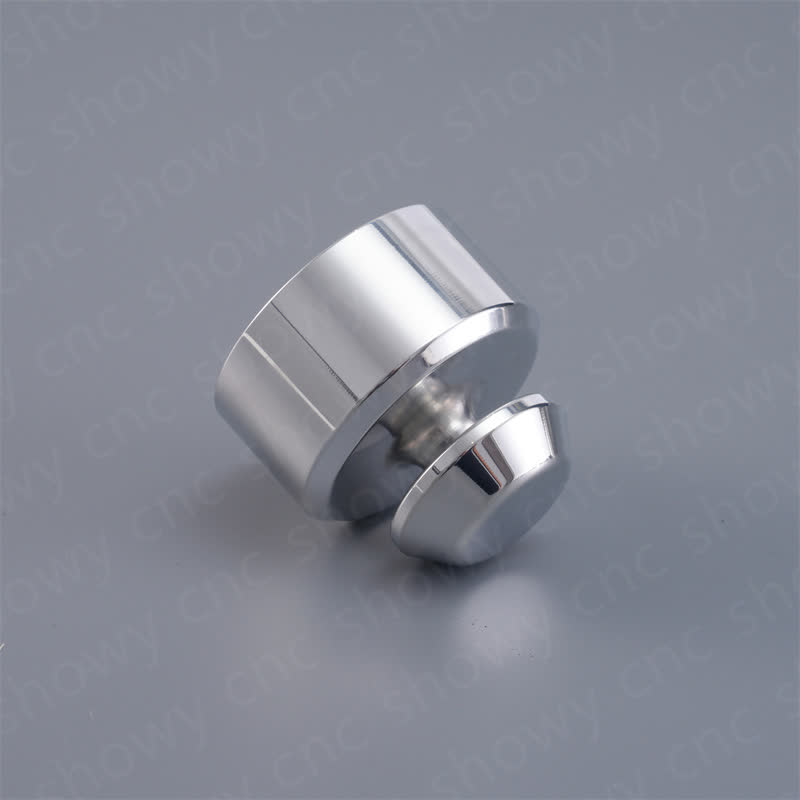


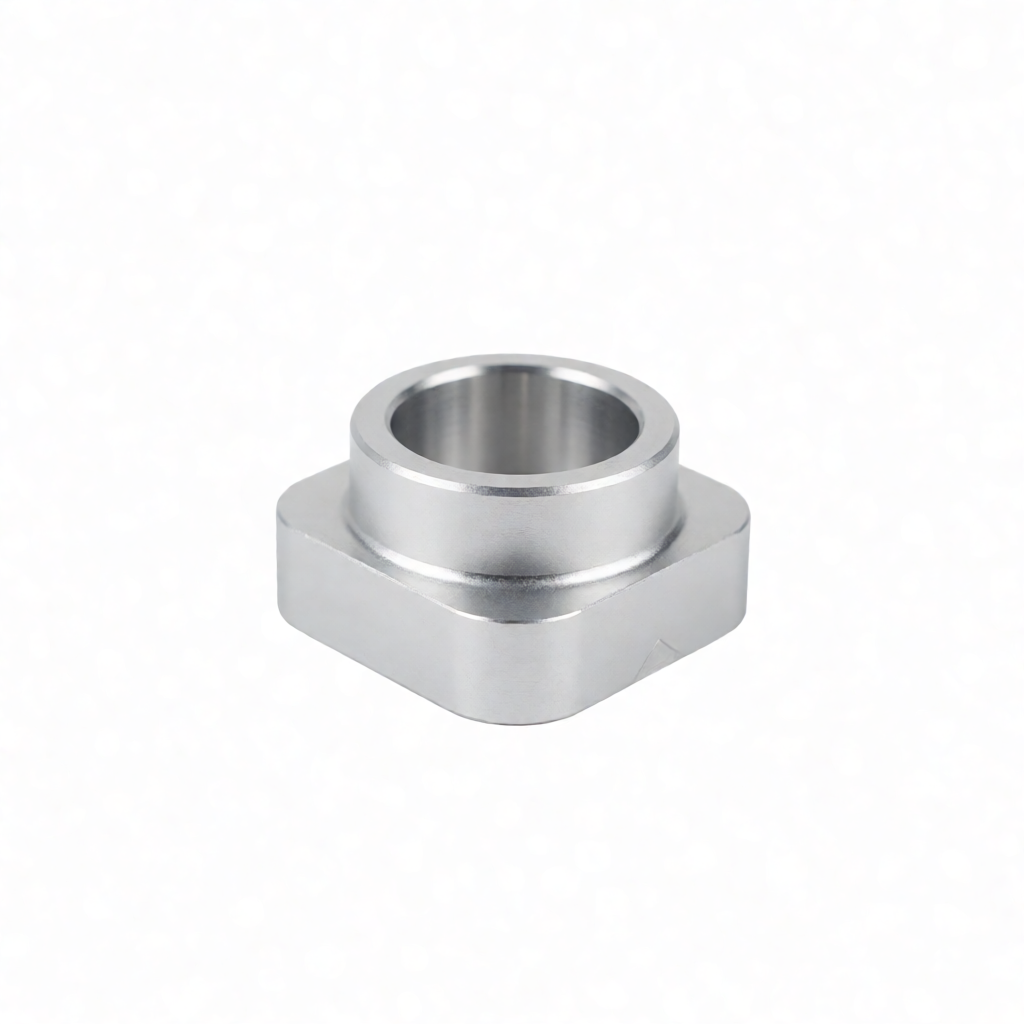
In precision component manufacturing, the cost breakdown of aluminum CNC machining is a core issue that procurement and engineering teams must master during the development phase. From prototyping to mass production, costs do not decrease linearly; rather, they are jointly influenced by material utilization, programming strategies, fixture design, and post-processing stages. Many projects fail to consider batch consistency requirements in the initial phase, leading to fluctuations in yield rates later on, which actually increases the amortized cost per unit. This article provides a systematic analysis of the differences in cost composition for aluminum CNC parts during the prototyping and mass production phases, based on actual production data and process logic. It also offers an executable DFM optimization path to help technical buyers clarify budget boundaries and quality trade-offs before requesting quotes.
Analysis of Cost Structure in the Prototyping Phase of Aluminum CNC
Hidden Proportions of Material, Labor Hours, and Setup Costs
The core characteristic of the prototyping phase is "non-repeatability." At this stage, costs include not only the cutting material fees for aluminum bars or plates but also the high programming setup time and the first-article inspection cycle. Taking the commonly used 6061-T6 aluminum alloy as an example, its material cost is typically 0.8-1.2 times the gross weight of the blank per kilogram. However, the real cost black hole lies in CAM path optimization time and trial cutting risks. Engineers need to spend 3-5 hours verifying tool interference and cutting parameters. This portion of labor is nearly zero in mass production, but in prototyping, it can account for more than 40% of the total labor hours.
- Programming and Simulation: Additional collision detection is required for 5-axis complex surfaces, increasing time consumption by approximately 20%.
- Custom Fixtures: If the part structure is asymmetric, custom vacuum suction plates or zero-point quick-release fixtures are required, with a single set costing approximately 500-2000 CNY.
- Material Loss Rate: Due to the lack of standardized production scheduling in the prototyping phase, the utilization of remaining material is low. The material waste rate is typically 15%-20%, significantly higher than the 5%-8% in mass production.
Patterns of Marginal Cost Changes from Prototyping to Mass Production
Quantitative Analysis of Learning Curves and Batch Effects
When the order quantity jumps from 10 units to 1000 units, the cost per unit shows a significant stepwise decrease. This is mainly due to the dilution effect of program standardization and tool life amortization. In the prototyping phase, tool bits may need to be changed once for every 10 units machined; whereas in continuous mass production mode, by monitoring cutting forces and vibrations, tool life can be extended to 50-80 units, greatly reducing downtime for tool changes.
| Cost Item | Prototyping (10 units) | Small Batch (100 units) | Mass Production (1000 units) | Trend of Change |
|---|---|---|---|---|
| Material Cost Percentage | 35% | 30% | 25% | Decreases with standardized remaining material management |
| Machine Hour Cost | 50% | 40% | 35% | Efficiency improves after program reuse |
| Post-Processing (Surface) | 10% | 15% | 20% | Large room for negotiated pricing in batch outsourcing |
| Management/Inspection Amortization | 5% | 10% | 15% | Full inspection requirements increase with batch size |
Key Process Parameters Affecting Aluminum CNC Accuracy
Accuracy is not only an acceptance standard but also a control variable for hidden costs. In 6061 aluminum alloy machining, tolerance control capability directly determines whether secondary precision grinding or laser Correction. Under well-rigged conditions, conventional CNC milling can consistently hold dimensional accuracy within ±0.02mm, achieving a surface finish of Ra0.8μm. If a customer specifies a ±0.01mm tolerance, thermal compensation strategies or a two-pass rough/finish operation must be introduced, increasing machine hours by 30%.
- Cutting Parameter Impact: Excessive feed rates cause aluminum chip adhesion (built-up edge), degrading surface finish; conversely, low spindle speeds increase cutting forces, inducing workpiece deformation.
- Tool Selection: Hard alloy coated tools offer a 2× longer service life compared to cemented carbide tools, but the cost per tool increases by 1.5×; the break-even point must be calculated based on batch size.
How DFM Design Optimization Reduces Overall Cost
Many high-cost CNC parts result from designs that ignore manufacturability. Experienced engineering teams provide DFM (Design for Manufacturability) recommendations prior to quoting. For instance, replacing overly deep blind holes with through-holes mitigates tool breakage risk and shortens drilling time; converting sharp internal right angles to R0.5 fillets not only enhances part strength but also reduces tool replacement frequency by 60%.
Material Grade Substitution
If the original design specifies 7075 high-strength aluminum for non-load-bearing components, substitution with 6061 general-purpose aluminum is recommended. 7075 exhibits approximately 15% higher cutting resistance than 6061 and is prone to color inconsistency after anodizing. Using 6061 for non-critical structural parts improves machining efficiency by 10%-15% and ensures higher consistency in surface oxidation, thereby reducing scrap rates.
The Leverage Effect of Surface Finishing on Total Cost
Aluminum CNC machining is not the final step; surface finishing often accounts for 20%-30% of the final delivery cost. Anodizing is the standard solution for enhancing appearance and corrosion resistance, but film thickness and color significantly impact cost. Standard clear anodizing is cost-effective, whereas dark or interference colors increase unit price by 40% due to process complexity. Additionally, if a high-polish or mirror finish is required, a polishing operation must be added after finish milling. This increases labor hours and demands extreme protection of clamping surfaces to prevent clamping marks, often necessitating polyurethane soft jigs, which raises the per-part fixture cost.
- Sandblasting: Primarily used to remove CNC tool marks and enhance anodize adhesion; standard parameters are 300-mesh abrasive grit at 0.4-0.6MPa pressure.
- Nickel/Zinc Plating: Suitable for applications requiring extreme wear resistance or electrical conductivity, but entails higher environmental costs; regulatory compliance must be verified.
Enhancing Value Through Batch Consistency Control
For production runs, the greatest risk is not a single out-of-tolerance part but batch variation. Mature manufacturers use SPC (Statistical Process Control) to monitor critical dimensions, sampling every 50 parts to track the Cpk value. If Cpk≥1.33, the process is stable, allowing a reduction in 100% inspection frequency; if Cpk