

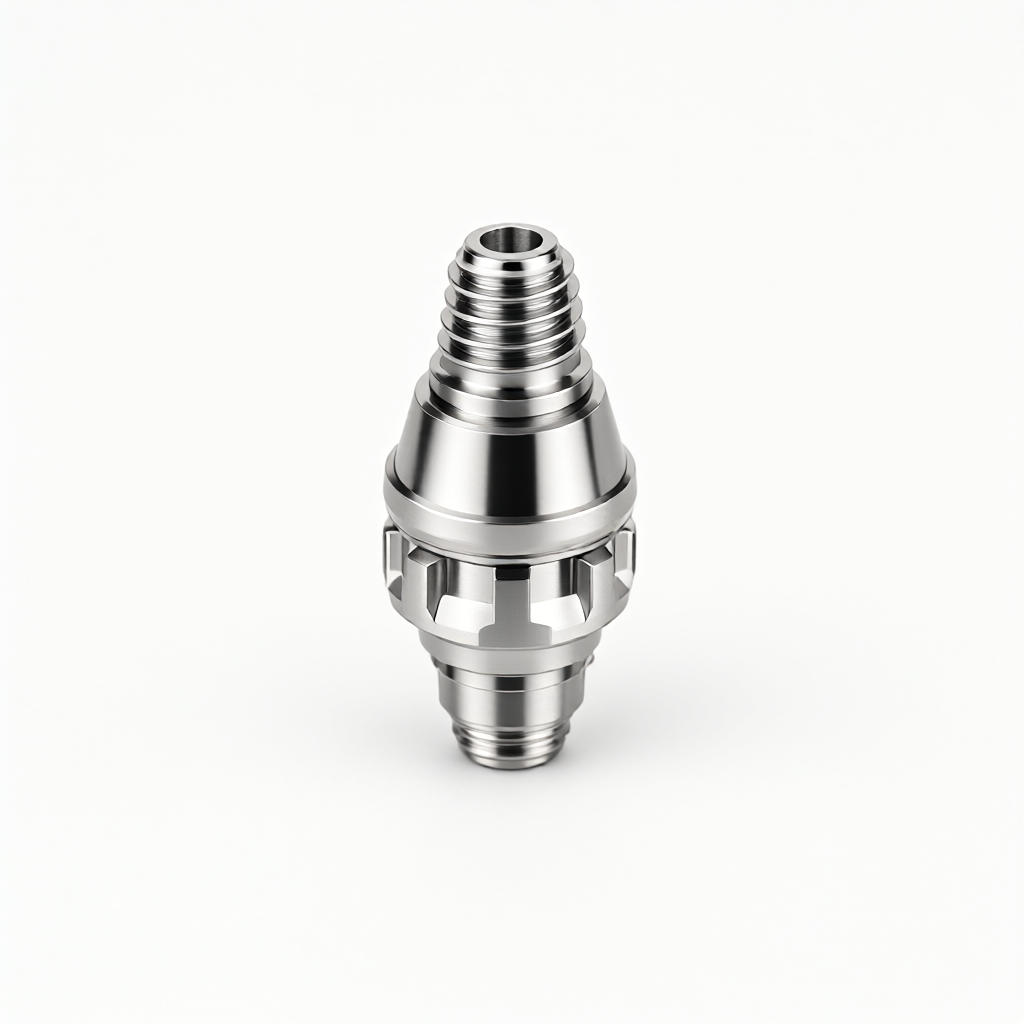
In the field of medical and dental implants, active surface modification directly determines osseointegration and clinical life. Many R & D teams and procurement engineers have found that CNC machined titanium or titanium alloy implants lack biological activity on their original metal surface and must undergo precise surface modification to induce osteoblast attachment. This article will provide an in-depth analysis of the complete process chain from CNC milling to reactive surface treatment, covering material selection, key parameters, tolerance control and acceptance criteria, providing an executable technical basis for project decisions. For teams that need to deliver highly bioactive implants in batches, mastering these details means higher clinical success rates and shorter time-to-market.
Titanium alloy material selection and CNC machining basis for implants
The choice of implant substrate is the premise of active surface modification. The main materials are Grade 5 titanium alloy (Ti-6Al-4V) and pure titanium (Grade 4). The former has higher strength, while the latter has better biocompatibility and excellent corrosion resistance. The cutting parameters should be controlled during CNC machining to avoid introducing residual stress and microcracks.
CNC milling key process parameters
- Tool Selection:Coated carbide or CBN cutters are recommended, with cutting radius matching implant microgeometry.
- Cutting parameters:Usually set the spindle speed at 8000 - 12000 rpm, feed speed control at 0.05 - 0.1 mm/rev, ensure that the surface roughness Ra ≤ 0.4 μ m.
- Tolerance control:Diameter tolerance is strictly controlled within ± 0.01 mm, length tolerance ± 0.02 mm, and accurate allowance is reserved for subsequent surface treatment.
Cleanliness after CNC machining is very important. Oil and chip residues will hinder the uniform action of subsequent acid etching or blasting media, so strict ultrasonic cleaning and degreasing treatment must be carried out after CNC process, which is the basis for ensuring the consistency of active modification.
Comparison of Core Process Principles of Active Surface Modification
Bioactive surface formation depends on two main routes: mechanical roughening and chemical modification. Each method has a different impact on osteoinductive effect, process complexity and batch consistency. The following table compares the engineering characteristics of the three main modification schemes.
| process type | surface topographical features | Typical aperture/roughness | main advantage | potential challenges |
|---|---|---|---|---|
| Large particle blasting + acid etching | porous network structure | Hole depth 2-5 μm, Ra 1.5-3.0 μm | Mature process, large bone contact area, controllable cost | Acid corrosion residues need to be thoroughly cleaned, and the medium concentration between batches needs to be monitored. |
| laser-induced thermal etching | ordered microwell array | Hole depth 5-20 μm, hole diameter 10-100 μm | Precise design of morphology, no chemical reagents, no heat affected zone | Equipment investment is high, processing speed is relatively slow, pulse parameters need to be optimized |
| Anodizing + Deposition | Nanoscale oxide layer + bioactive factors | Film thickness 100-500 nm | Can be loaded with drugs or growth factors, antibacterial performance can be enhanced | The adhesion of the film layer needs to be tested, the process steps are many, and the requirements for pretreatment are extremely high. |
From an engineering point of view, large particle blasting + etching is still the mainstream option for mass production, and its cost-effectiveness ratio is suitable for large-scale applications. Laser etching has obvious advantages in customization and high-end product lines, especially for R & D projects requiring specific surface topologies. Anodic oxidation modification is often used as an auxiliary or composite process to improve surface chemical activity rather than changing macro morphology.
Key points of process operation and batch consistency control
Regardless of which modification route is chosen, process stability determines the biological safety and performance consistency of the final product. The following are key aspects that must be controlled:
- Standardization of pretreatment:All CNC-machined implants must undergo the same degreasing, water cleaning, acid pickling passivation steps to remove surface oxide films and contaminants and expose active titanium matrix.
- Blast Parameter Lock:Aluminum oxide (Al ˇ O) particles with particle size of 0.25-0.35 mm are used. The blasting pressure is set at 0.4-0.6 MPa and the distance is maintained at 50-80 mm. Particle size distribution should be tested for particle batches to prevent foreign materials from being mixed.
- Acid etching process monitoring:If acid etching is used, the acid temperature (usually 70-90℃) and immersion time should be strictly monitored, and the acid composition should be analyzed regularly. After etching, it must be thoroughly rinsed with deionized water to neutrality.
- Cleanliness verification:The modified implant should pass water contact angle test or surface energy analysis to ensure no chemical residue. Cleanliness directly affects cell adhesion.
The greatest risk in batch production is process drift. SPC statistical process control is recommended for critical process parameters (e.g. blast pressure, laser fluence, oxidation voltage) and process logs are maintained for each batch to meet medical device audit traceability requirements.
Testing and Acceptance Criteria for Surface Modification Effects
The acceptance of active surface modification cannot be based solely on visual inspection, but must rely on quantitative test data. The following evaluation dimensions and typical acceptance criteria are commonly used in the industry:
Topography and roughness inspection
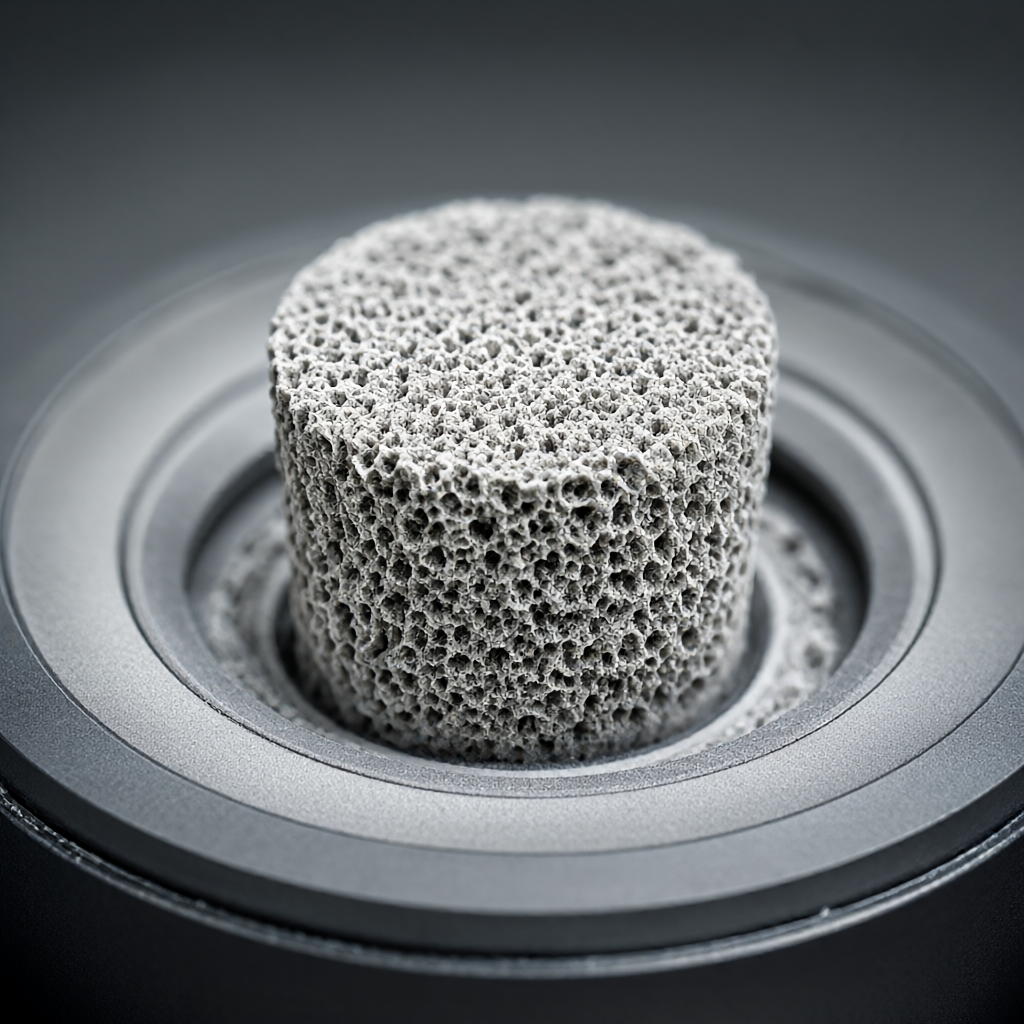
3D surface topography is obtained using confocal laser scanning microscopy (CLSM) or atomic force microscopy (AFM). Key parameters include arithmetic average roughness Sa, maximum peak-to-valley height Sz, and porosity. For sandblasted etched surfaces, Sa values are generally required to fall in the range of 1.5-3.0 μm and porosity 20-35%.
Cleanliness and chemical composition analysis
- Water contact angle:The modified titanium surface should be hydrophilic, and the contact angle is usually less than 60°, preferably between 40 ° and 50°, indicating that the surface is clean and biologically active.
- Surface element analysis:X-ray photoelectron spectroscopy (XPS) or energy dispersive X-ray spectroscopy (EDS) confirmed that there is no residual chlorine, sodium, carbon and other polluting elements on the surface, and the molar ratio of titanium to oxygen is close to 2:1 (TiO ˇ).
functional verification
For high-end products, in vitro cell experiments can be performed, such as attachment, proliferation and differentiation experiments of MC3T3-E1 preosteogenic cells or human bone marrow mesenchymal stem cells. Although this is usually completed in a third-party laboratory, the results can be used as process optimization. Feedback indicators. For batch shipments, morphology, cleanliness and mechanical binding force tests are usually used as factory acceptance criteria.
Common Failure Modes and Avoidance Strategies
In actual production, the active surface modification process may encounter the following problems, and preventive measures need to be formulated in advance:
- Surface heterogeneity:This is manifested by low roughness or incomplete blast coverage in some areas. Avoidance methods include optimizing blast angle, increasing blast pass, checking laser focus and scan path, and enhancing cleanliness of CNC pre-treatment.
- Cytotoxicity due to residual contamination:Impurities in etching solutions or laser plasmas are not completely removed. The avoidance strategy is to establish strict final cleaning procedures, use ultrapure water multi-channel rinsing, and perform TOC (total organic carbon) or ICP-MS detection.
- Film peeling:In anodic oxidation process, the adhesion between oxide film and substrate is insufficient. It is necessary to optimize the oxidation voltage and electrolyte formula, and introduce a transition layer between film and substrate, which is verified by adhesion test (such as cross hatch method).
- Lot-to-lot variation:The root cause is process parameter drift or batch difference of raw material (titanium). The implementation of incoming spectral analysis, SPC control of key process parameters and full inspection of each batch can effectively mitigate.
FAQ: CNC machining and active modification of medical implants
Can active surface modification be carried out directly after CNC machining of implants?
No. After CNC machining, it must undergo strict degreasing, washing and passivation pretreatment to remove cutting oil, metal chips and unstable oxide layers, otherwise the active modification effect will be significantly reduced and unstable.
Does active surface modification alter the overall size of the implant?
Yes, but very little. Sandblasting or acid etching results in minimal material removal, usually between 10-50 μm on one side. This process allowance must be allowed in the design, otherwise the final size will be out of tolerance.
Laser etching or sandblasting etching, which is more suitable for mass production?
From the perspective of current engineering economy, large particle sandblasting + acid etching process is more mature, equipment investment is low, processing speed is fast, suitable for mass production. Laser etching accuracy is higher, but single processing time is longer, equipment cost is higher, more suitable for high added value or customized products.
How to prove that the active surface is free of contamination and meets the requirements for medical implantation?
A complete cleanliness validation report is required, including water contact angle testing, XPS/EDS elemental analysis to confirm absence of chlorine and carbon residues, and possible TOC or endotoxin testing. All tests are performed in accordance with standards related to medical devices such as ISO 14155-1/2.
What are the special requirements for the storage environment of modified implants?
Active surfaces need to avoid secondary contamination in order to maintain their biological activity. Clean packaging materials are generally required, stored in a dry, oil-free environment, and clearly labeled with an expiration date. Some active coatings (e.g., those containing growth factors) may be sensitive to temperature and humidity and should be stored in accordance with supplier guidelines.
Conclusions and recommendations for action
Active surface modification of medical dental implants is a key process node connecting precision CNC machining with clinical biological functions. The choice of modification route depends on product positioning, batch size and clinical goals. The reliability of the final product is determined by the cleanliness of the pretreatment, the stability of process parameters and the complete test validation chain. For project teams that are advancing implant R & D or mass production, it is recommended to incorporate CNC machining allowance, surface modification process and inspection acceptance criteria into the same design verification document to ensure consistency from the source.
If your project is looking for a manufacturing partner who can handle high precision CNC machining of titanium alloys and cooperate with active surface modification and batch consistency control, please provide drawings and process requirements. We will provide process feasibility evaluation and quotation based on specific structure and batch requirements.