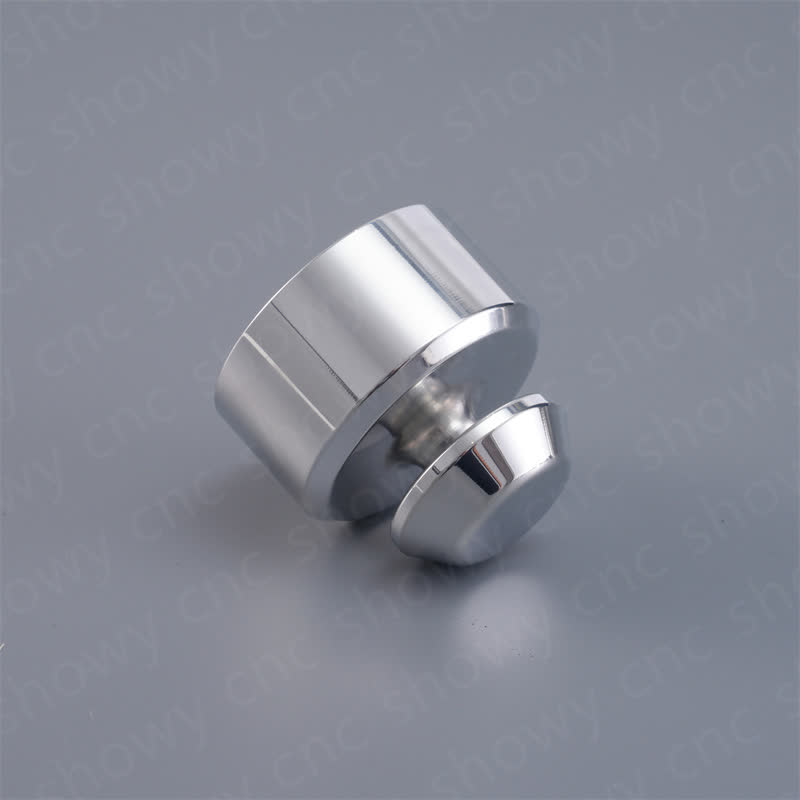


Root Causes of High CNC Machining Quotes: Cost Breakdown from Material to Post-Processing
In B2B precision manufacturing procurement, discrepancies in CNC machining quotes often stem from a perception gap regarding hidden costs. Many engineers, when evaluating quotes, focus only on tool depreciation and machine-hour rates, overlooking material utilization, fixture setup efficiency, surface texture requirements, and the allocated programming costs in low-volume batches. To understand why certain quotes appear inflated, it is essential to deeply dissect the full-chain cost composition from drawing to finished product, identifying which factors are rigid process requirements and which are wastes resulting from poor supplier management.
Material Selection and Utilization: Core Variables Determining the Base Quote
Material costs account for a high 30%–50% of total CNC costs and are directly influenced by material utilization. When using high-cost alloy steels (such as 17-4PH) or titanium alloys (Ti-6Al-4V), the high cutting resistance and rapid tool wear significantly increase machine-hour costs. More critically, complex geometries can reduce blank material utilization to below 40%, with the cost of handling remaining scrap also factored in. For appearance-critical components, if a high-gloss or mirror finish is specified, additional polishing allowance must be reserved, further reducing material utilization. Procurement teams should evaluate whether lower-cost 7075-T6 aluminum can substitute for certain structural parts, or whether the design can be optimized to reduce unnecessary wall thicknesses, thereby lowering the material baseline.
The selection of material grade also impacts the difficulty of subsequent processing. For instance, stainless steel 304 has low magnetic permeability but a high tendency for work hardening, requiring controlled cutting speeds and feed rates to prevent tool blunting; 316L, containing molybdenum, offers superior corrosion resistance but worse machinability, with quotes typically 15%–20% higher than 304. Understanding these characteristics helps anticipate cost ranges during the R&D phase, avoiding budget overruns caused by late-stage material upgrades.
Process Complexity and Setup Efficiency: Primary Drivers of Machine-Hour Costs
Machine-hour rates are not fixed but vary dynamically with process complexity. A small shaft part completing on a 3-axis milling machine versus an aerospace structural component requiring 5-axis simultaneous machining of complex cavities can differ in machine-hour costs by several times. Although 5-axis machining carries a higher unit rate, it is often more economical than multi-operation 3-axis setups by reducing setup counts and ensuring positional accuracy between faces, while also minimizing cumulative errors.
Setup efficiency is another frequently overlooked cost point. If complex parts require transferring between multiple machines, each setup involves re-establishing datum references, tool-setting time, and the risk of setup-induced deformation. Utilizing turning-milling composite or sliding head lathes allows multiple operations—turning, milling, drilling, and grinding—to be completed in a single setup, drastically reducing handling and repositioning time. For high-volume orders, automated loading/unloading systems and dedicated fixtures can also significantly reduce labor intervention costs and improve equipment utilization. Parts with inflated quotes often conceal efficiency losses from multiple setups, frequent tool changes, or slow finishing passes.
Tolerances, Roughness, and Surface Treatment: The Hidden Cost of Precision
Tolerance grades and surface roughness requirements directly dictate machining strategies. Tolerances of ±0.01mm or tighter demands stricter control of semi-finishing allowances, potentially requiring an additional finishing operation; surface roughness requirements of Ra0.4μm or higher luster necessitate using fine polishing tool paths, reduced feed rates, and premium coolants, which can increase machine-hour costs by 30%–50%. If a mirror finish is specified (Ra