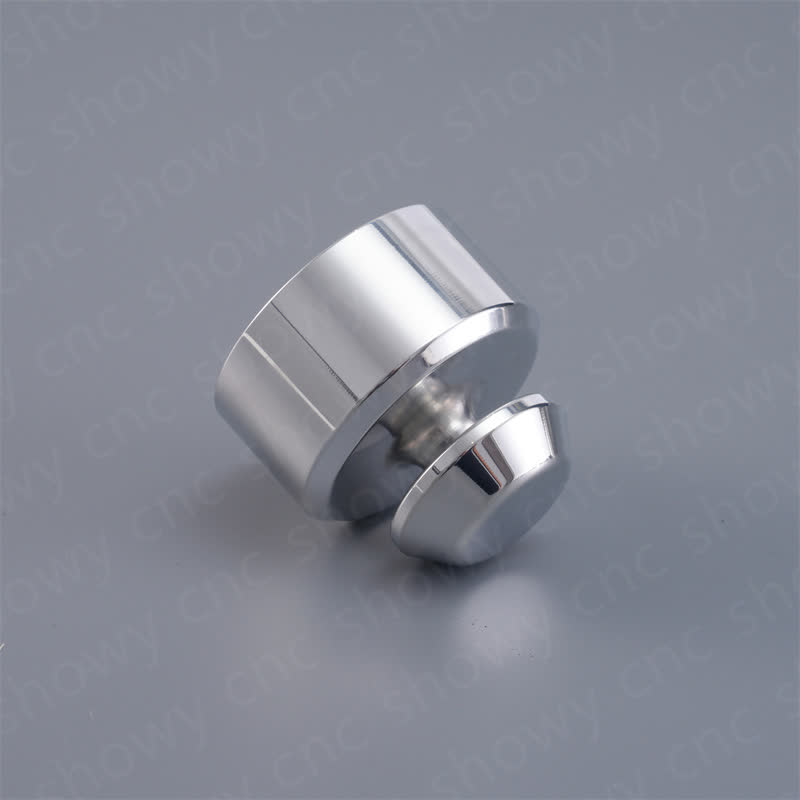


Material Interchangeability in CNC Parts Design: Performance Difference Analysis Between 7075 and 6061 Aluminum
When customizing CNC parts, engineers and procurement specialists frequently face a critical decision: whether to substitute the specified 7075 aluminum alloy with 6061 aluminum alloy. This material interchangeability directly affects the mechanical properties, machining efficiency, surface appearance, and final cost of the part. As professional precision CNC manufacturers, we must base our judgment on specific engineering data rather than empiricism to determine interchangeability. The core lies in understanding the essential differences between the two materials in terms of strength, hardness, corrosion resistance, machinability, and heat treatment response, and comprehensively evaluating these against the actual load requirements of the part, tolerance standards, and batch consistency demands. Blind interchangeability may lead to premature deformation, fatigue failure, or surface defects during service, resulting in high rework and downtime costs. Therefore, rigorous material selection verification during the drawing review phase is a key prerequisite for project success.
Basic Material Properties Comparison Between 7075 and 6061 Aluminum Alloys
To understand the performance impact of interchangeability, one must first clarify the basic physical and chemical properties of the two alloys. 7075 belongs to the 7xxx series high-strength aluminum alloy, with zinc (Zn) as its primary alloying element; while 6061 belongs to the 6xxx series magnesium-aluminum-silicon (Mg-Al-Si) alloy. This difference in elemental composition determines their fundamental divergence in mechanical performance. For most CNC parts, material selection is not just a contest of strength but a balance of stiffness, toughness, and processability.
- Tensile Strength: The tensile strength of 7075-T6 is typically above 515 MPa, whereas the tensile strength of 6061-T6 is approximately 290 MPa. This means that when subjected to heavy tensile stresses, 7075 has a significant advantage.
- Yield Strength: The yield strength of 7075-T6 is approximately 460 MPa, while that of 6061-T6 is approximately 240 MPa. This difference is crucial for precision structural components that need to resist permanent deformation.
- Hardness: The Brinell hardness (HB) of 7075-T6 is approximately 150, and that of 6061-T6 is approximately 95. Higher hardness means that 7075 has better wear resistance but also places higher demands on tool wear.
- Density: The densities of the two are very close, both ranging between 2.78-2.82 g/cm³, so in gravity-sensitive applications, interchangeability has a negligible impact on weight.
It is worth noting that although 7075 has higher strength, its elongation (typically 9%) is lower than that of 6061 (typically 10-12%), meaning that 7075 has slightly lower plasticity and weaker resistance to fatigue crack propagation. In scenarios involving dynamic loads or impact loads, the toughness of 6061 may be more robust. This difference in properties is the primary technical indicator for judging whether interchangeability is safe.
Machinability and CNC Process Parameter Differences
Material interchangeability is directly linked to machining cost and cycle time. Due to its high strength and hardness, 7075 aluminum alloy has higher cutting resistance, leading to accelerated tool wear and higher cutting temperatures during machining. In contrast, 6061 aluminum alloy has excellent machinability and easily achieves high-gloss finishing.
In practical CNC milling and turning processes, process parameters need to be adjusted accordingly:
| Parameter/Property | 7075-T6 Aluminum Alloy | 6061-T6 Aluminum Alloy |
|---|---|---|
| Recommended Milling Cutting Speed | 500-700 m/min | 700-1000 m/min |
| Recommended Feed Rate (F) | Lower (Limited by tool wear) | Higher (Efficient material removal) |
| Tool Life | Shorter (Carbide tools require frequent changes) | Longer (Standard carbide tools are sufficient) |
| Surface Finish Potential | Achievable Ra0.4μm (Requires fine optimization) | Easier to achieve Ra0.4μm and mirror finish |
| Cutting Heat | Higher, requires strong coolant | Moderate, chip evacuation is relatively easy |
För detaljer med mycket höga krav på ytan, såsom konsumentelektronikskal eller ljudkomponenter, kan 6061 tack vare lågt restess i ytterst skuret material och god polerbarhet ofta tillhandahålla en mer stabil effektiv högluster yta. 7075 riskerar vid hög rotationshastighet om kylningen är otillräcklig att få termiska deformationer eller ojämn yta, vilket ställer högre krav på maskinverksstyvhet och kylsystemet. Om originalet är utformat för 7075 och materialbytet byts till 6061, kan tidsbesparing i tillverkning göras, men verktygsbanorna måste omprövas för att utnyttja dess goda bearbetbarhet.
Påverkan på strukturell integritet vid materialersättningen av mekaniska egenskaper
Att byta ut 7075 med hög styrka till 6061 innebär en direkt risk för minskad styvhet och otillräcklig styrka. 6061 har en elasticitetsmodul (Youngs modul) på ca 69 GPa, jämfört med 71 GPa för 7075, vilket innebär att det bara finns liten skillnad i böjstyvhet vid små deformationer. Däremot är 6061:s sträckgräns halva den som 7075. Vid stora laster nära sträckgränsen eller vid chockbelastning kan det leda till att bytet till 6061, om säkerhetsfaktorn för ursprungliga detaljen är låg, kan leda till att detaljen upplever permanent deformation eller brott under samma last.
Trötthetsegenskaper är också en viktig faktor. 7075-T6 har i regel högre trötthetsstyrka än 6061-T6. För strukturlast som utsätts för cykliskt varierande spänningar (t.ex. robotled eller flyglänkar) kan ett blint materialbyte till 6061 förkorta livslängden avsevärt och öka risken för misslyckande. Ingenjörerna måste beräkna den nya säkerhetsfaktorn med hjälp av S-N-kurvor (spännings–livslängdskurvor). Om ursprungligt material hade tillräcklig marginal kan materialbytet vara möjligt; annars krävs att 7075 behålls eller att tvärsektionen vidgas för att kompensera för styrkförlusten.
Analyserad kompatibilitet för korrosionstånd och ytbehandlingar
Det finns skillnader i korrosionstånd mellan de två aluminiumlegeringarna. 7075 innehåller mer zink och magnesium, och dess passivfilms stabilitet är något lägre än för 6061. I marinmiljöer eller fuktiga industriella miljöer är 7075 mer känslig för punktkorrosion och kräver bättre ytskydd. 6061, med sin relativt ”rena” sammansättning, har bättre atmosfärskorrosionstånd och är lämplig för komponenter som ut exponeras utomhus över lång tid.
För ytbehandlingar påverkar materialbytet processparametrarna direkt:
- Anodisering: 6061 har bättre färgtålighet än 70