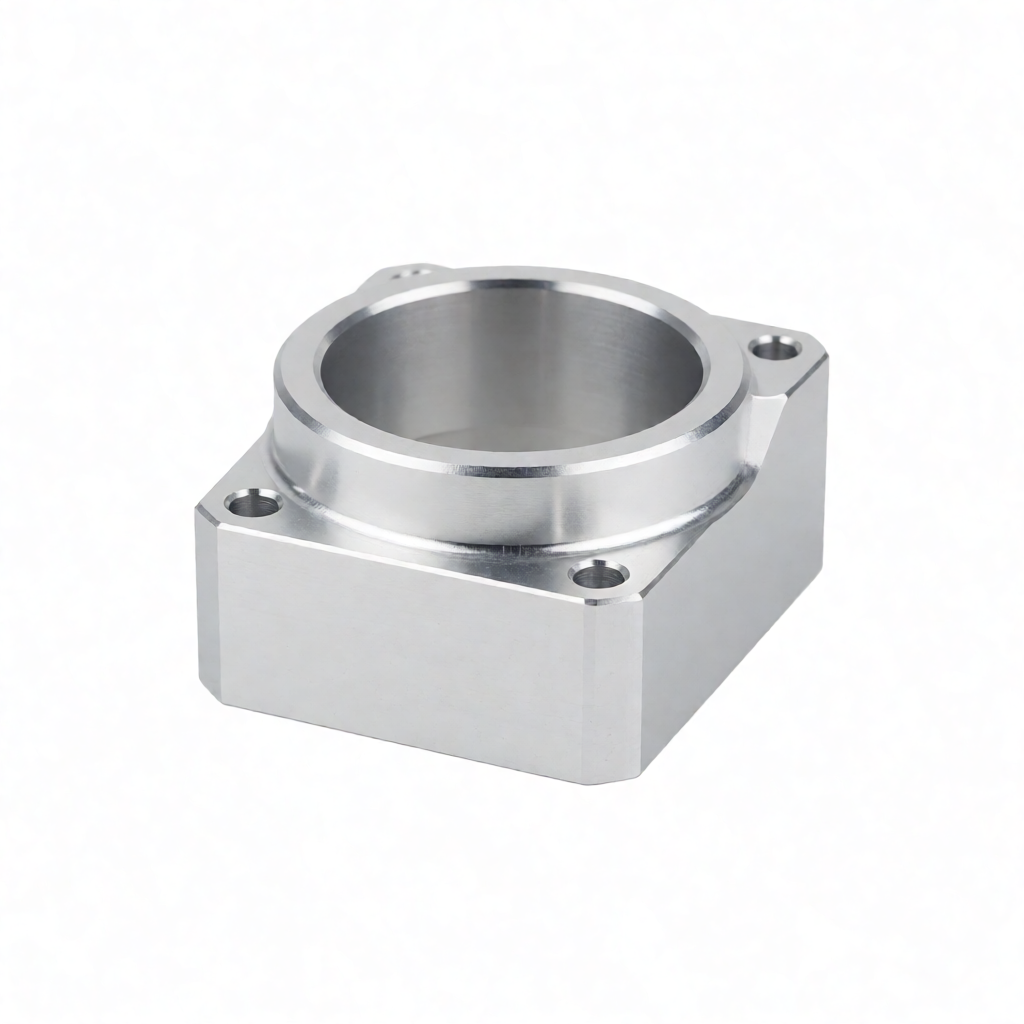
For engineers and technical procurement managers involved in bulk purchasing of fasteners, the core of cost reduction strategies for mass production of CNC machined fasteners is not simply price suppression, but rather reducing total costs through material selection optimization, process route integration, and quality stability control. Based on practical experience in precision manufacturing, this article outlines the logic of cost reduction throughout the entire process from design-side DFM optimization to mass production lead times. It provides actionable technical parameters and comparison solutions, helping companies achieve a reasonable reduction in unit manufacturing costs while ensuring ±0.01mm accuracy and Ra0.4μm surface finish.
Analysis of Cost Composition in Mass Production of CNC Fasteners
Many buyers focus only on "unit price" when requesting quotes, overlooking the hidden elements in fastener mass production that truly affect total cost. Fastener structures are relatively simple; their material cost share is usually less than 50%, while machining, surface treatment, and quality inspection constitute the main cost variables.
- Material loss rate: The stock allowance for turning and milling directly determines the scrap ratio. For small stainless steel fasteners, optimizing the blank shape can increase material utilization by 15%-20%.
- Machining time and tool cost: In mass production, the machine-hour rate allocated per unit and tool life management are key to cost reduction. Swiss-type lathes, compared to ordinary lathes, can save more than 40% of clamping and tool retraction time for short-diameter parts.
- Quality inspection and rework costs: Fastener failure often leads to batch rejection or customer complaints. Establishing an in-process inspection and 100% outgoing inspection mechanism moves quality costs forward, significantly reducing the risk of late-stage claims and line stoppages.
The first step in cost reduction is to determine "which process best suits your fastener structure". Simple axially symmetric parts are suitable for turning, while those with complex side holes or non-standard threads require turning-milling composite or CNC milling.
Process Route Comparison: Turning, Milling, and Turning-Milling Composite
Choosing the correct machining process is the foundation of cost reduction. Different equipment has different applicable limits regarding fastener geometry, dimensional range, and surface quality. The following table compares the performance of three mainstream processes in fastener mass production:
| Process Type | Applicable Fastener Features | Accuracy and Surface Quality | Mass Production Cost Advantage | Limitations |
|---|---|---|---|---|
| CNC Turning (Swiss-type Lathe) | Small length-to-diameter ratio (L/D2) | All features completed in a single clamping, concentricity
« Previous
CNC machining of aviation parts: titanium alloy process challenges
Next »
Productieplanning voor CNC-machining van aluminiumlegeringen: van prototype naar massa-productie
Aanbevolen lectuur
Gerelateerde inhoudOntdek meer artikelen die u kunnen interesseren.
Offerte binnen 2 uur
Stuur uw tekening, offerte binnen 2 uur.Stuur uw STEP / DWG / PDF-tekening en onze engineers reageren binnen 2 uur met een gedetailleerde offerte inclusief gratis DFM-analyse en procesadvies — vrijblijvend. Stuur ons uw tekening — de rest doen wijStuur uw STEP / DWG / PDF-tekening en ontvang binnen 2 uur een gedetailleerde offerte met gratis DFM-analyse en procesadvies. Geen minimumbestelling — vanaf 1 stuk.
Live aanvragen
|