





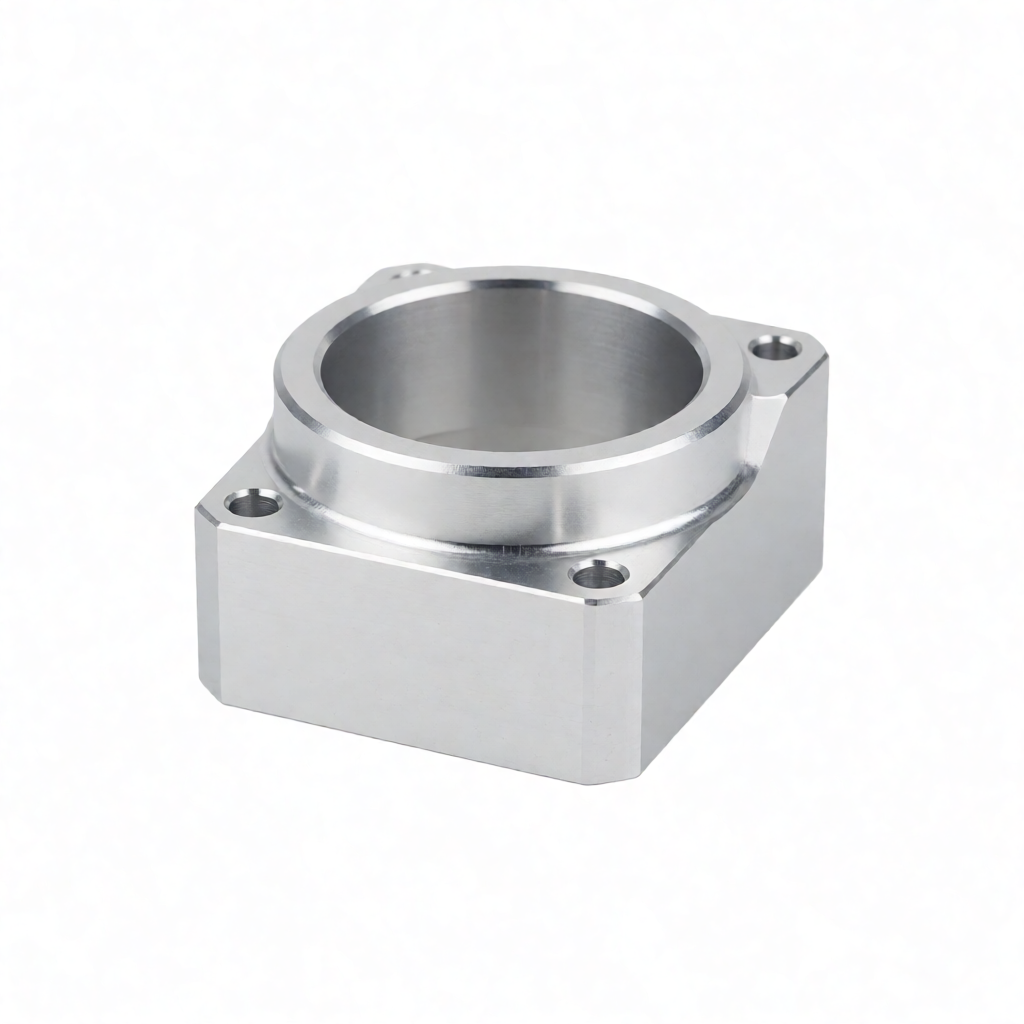
For engineers and technical procurement professionals purchasing fasteners in large volumes, the core of cost reduction strategies for batch production of CNC machined fasteners is not simply pressuring prices, but reducing overall costs through optimization of material selection, consolidation of process routes, and quality stability control. Based on practical experience in precision manufacturing, this article outlines the logic of cost reduction from DFM optimization on the design side to mass production delivery schedules, providing implementable technical parameters and comparison solutions to help companies achieve a reasonable reduction in per-unit manufacturing costs while ensuring ±0.01mm precision and Ra0.4μm surface finish.
Analysis of Cost Structure for CNC Fastener Batch Production
Many buyers only focus on the "unit price" when requesting quotations, overlooking the hidden elements that truly affect total costs in fastener batch production. Fastener structures are relatively simple, and material costs typically account for less than 50%, while machining, surface treatment, and quality inspection constitute the main cost variables.
- Material loss rate: The remaining material from turning and milling directly determines the scrap ratio. For small stainless steel fasteners, optimizing the blank shape can increase material utilization by 15%-20%.
- Machine time and tooling costs: In batch production, the apportioned machine rate per unit and tool life management are key to cost reduction. Compared to conventional lathes, Swiss-type lathes (sliding type) can save over 40% of clamping and tool withdrawal time in short-diameter part machining.
- Quality inspection and rework costs: Fastener failure often leads to the scrapping of entire batches or customer complaints. Establishing in-process inspection and full pre-shipment inspection mechanisms moves quality costs forward, significantly reducing the risk of subsequent claims and line stoppages.
The first step in cost reduction is to clarify "which process is most suitable for your fastener structure." Simple axially symmetric parts are suitable for turning, while those with complex side holes or non-standard threads require turning-milling compound or CNC milling intervention.
Process Route Comparison: Turning, Milling, and Turning-Milling Compound
Choosing the correct machining process is the cornerstone of cost reduction. Different equipment has different applicable boundaries regarding the geometric features, size ranges, and surface quality of fasteners. The following table compares the performance of three mainstream processes in fastener batch production:
| Process Type | Applicable Fastener Features | Precision and Surface Quality | Batch Cost Reduction Advantage | Limitations |
|---|---|---|---|---|
| CNC Turning (Swiss-type Lathe) | Small aspect ratio (L/D2) | All features completed in a single clamping, concentricity
« Previous
CNC-bearbejdning af flydels: udfordringer med titaniumlegeringer
Next »
CNC-bearbejdling af aluminiumlegeringer: Logik i produktionsskema – strategi for skift fra prototyper til masseproduktion
Anbefalet læsning
Relateret indholdUdforsk flere artikler, der kan interessere dig.
Tilbud på 2 timer
Send din tegning, få tilbud på 2 timer.Send din STEP / DWG / PDF-tegning, så vender vores ingeniører tilbage inden for 2 timer med et detaljeret tilbud inkl. gratis DFM-analyse og procesrådgivning — uden forpligtelse. Send os jeres tegning — resten klarer viSend din STEP / DWG / PDF-tegning og få et detaljeret tilbud med gratis DFM-analyse og procesrådgivning inden for 2 timer. Ingen minimumsordre — fra 1 stk.
Live forespørgsler
|



