





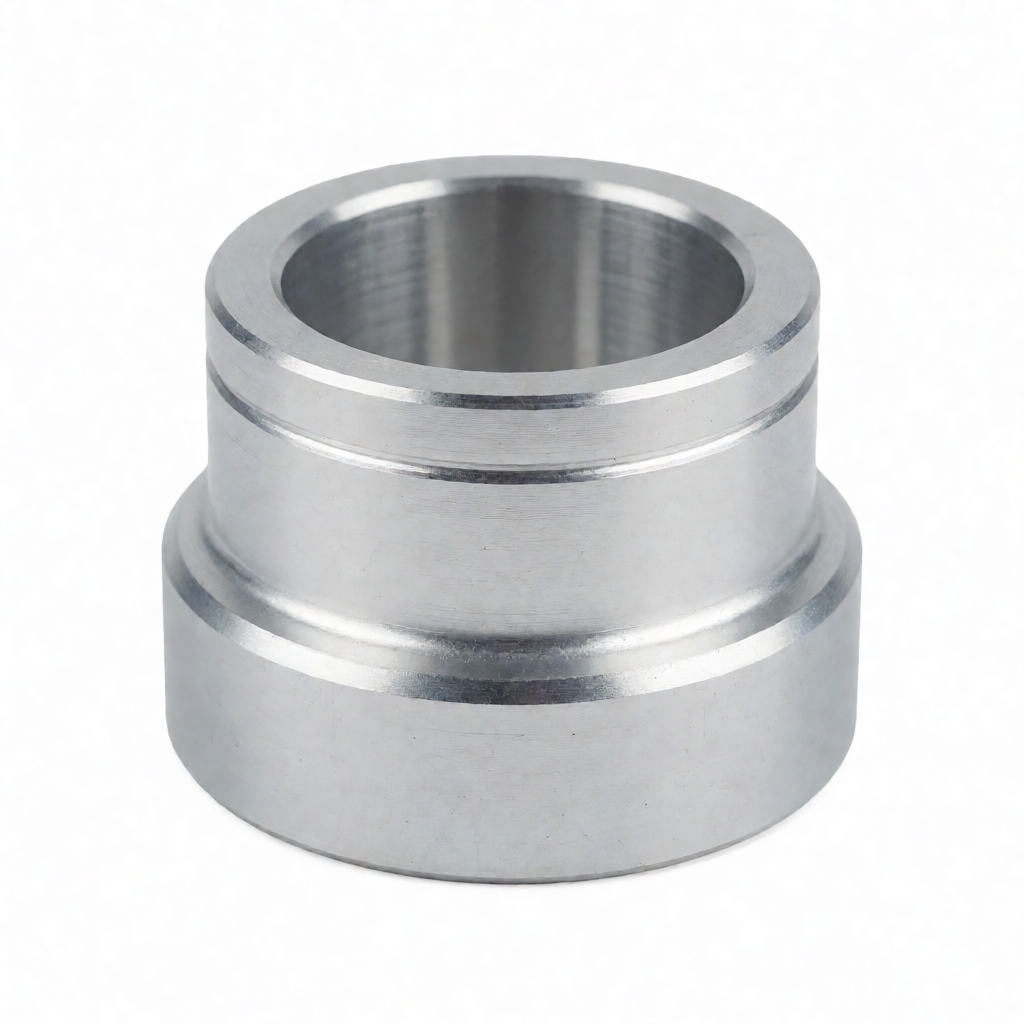
Why internal undercuts in CNC part design are a core challenge for 5-axis machining
In precision CNC part custom machining, internal undercuts or deep cavity structures often prevent the tool from fully contacting the geometric surface, leading to residual material, cosmetic defects, and functional failure. For products requiring high surface finish, scratch-free surfaces, and high batch consistency, these design flaws not only increase rework costs but can also cause stress concentration and assembly interference.
Traditional 3-axis milling is limited by the fixed tool axis orientation perpendicular to the workpiece surface. When machining internal R-corners, deep cavities, or inclined sidewalls, it is highly susceptible to "overcut" or "undercut". In such cases, 5-axis simultaneous machining coordinates the control of the X, Y, Z linear axes and A, B rotary axes, allowing the tool to approach the dead corner in an optimized orientation, fundamentally solving the machinability of internal regions. This article is based on engineering practice and analyzes how to mitigate internal undercut risks through design optimization and 5-axis tool path strategies.
Engineering impact of internal undercuts on CNC machinability
Geometric limitations of tool radius and undercut depth
During the design phase, engineers must first evaluate tool capabilities. Assuming a ball-nose tool of diameter D is used to machine an internal R-corner, if the undercut depth H is less than the tool ball radius Rt and the undercut angle θ is constrained, the tool ball surface will interfere with the part surface. Based on geometric relationships, the minimum machinable internal R-corner typically must satisfy R_min ≥ D/2 + safety margin. If the internal R-corner in the design drawing is smaller than this value and the depth is significant, a 3-axis tool cannot reach the bottom, necessitating reliance on 5-axis lateral approach or a smaller diameter tool (which brings strength and vibration issues).
Dual risks of stress concentration and surface quality
Internal undercuts are not only machining challenges but also structural weak points. Sharp internal corners (R



